
Color shift paints, sometimes called chameleon paints, use interference pigments that reflect different wavelengths of light depending on the viewing angle, so a single coat can read as one color from straight on and a completely different color from the side. Green Stuff World sells a color shift line alongside its standard Maxx Formula acrylics, aimed at painters who want a car-paint-style flip effect on armor plates, insect carapaces, vehicle panels, or anything meant to look otherworldly or mechanically slick.
How color shift paint actually works
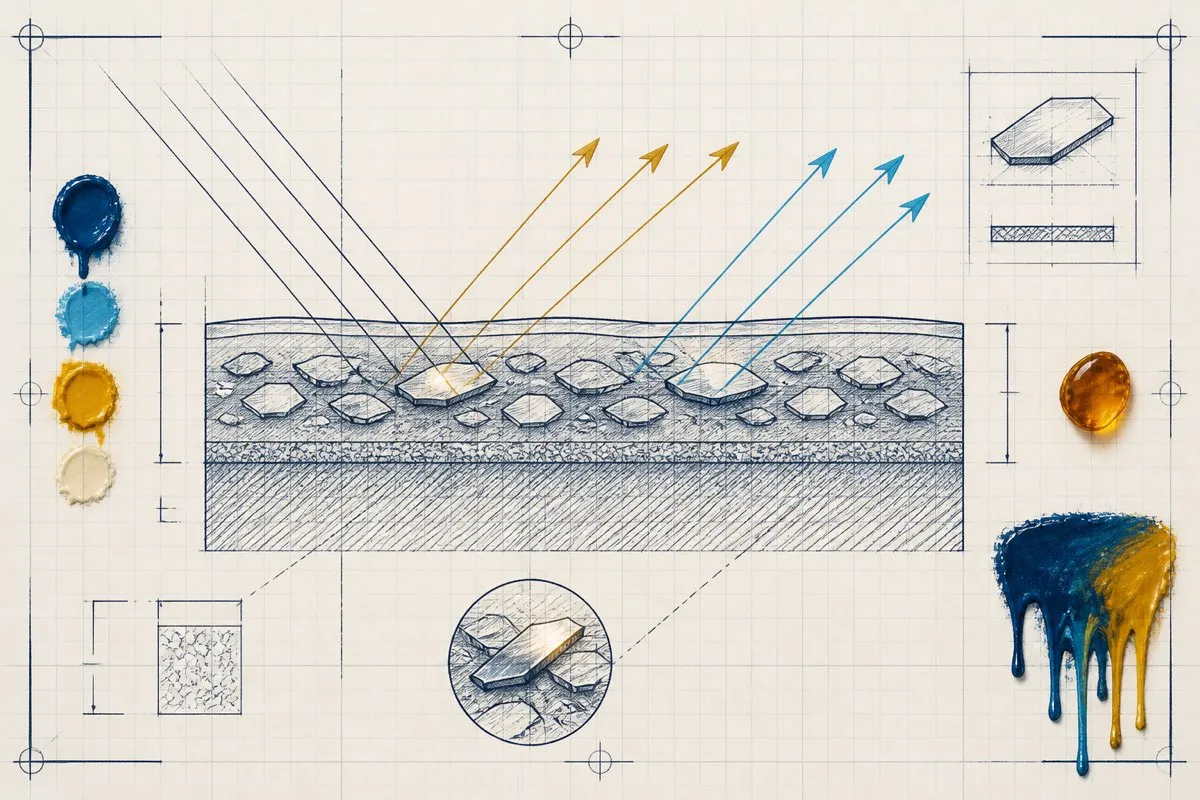
The flip effect comes from mica or interference pigment particles suspended in the paint medium, the same technology used in shifting automotive paint jobs and some cosmetics. Light hits the flat, layered particles at different angles as your eye or a camera moves around the object, and each angle bounces back a different part of the color spectrum. It is not a trick of two paint layers, it is a property of the pigment itself, which is why the effect holds up in raking light and photographs differently depending on the angle a photo is taken from.
For it to read clearly, the base coat underneath matters. A dark or black base tends to make the shift read more dramatically, since interference pigments show their strongest contrast against a low base reflectance. A white or light base mutes the effect into something closer to a subtle shimmer.
When color shift paint suits a model and when it does not
It works best on large, mostly flat surfaces where the eye can track the shift as it moves: vehicle hulls, wing panels, insectoid carapaces, armor plating on a big monster, or a cloak meant to look unnatural. It reads poorly on small, highly detailed areas, since the shift needs surface area and a consistent angle to register, and it can look muddy squeezed into recesses and tight detail where light does not travel across the surface the way it does on a flat panel.
Most painters use it as an accent rather than a base coat for an entire model. A single color shift panel on an otherwise conventionally painted miniature reads as a deliberate effect. A model painted entirely in shift colors can look busy and lose the read of the sculpt's actual shape under normal lighting.
Why this range is not in the paint matching chart
The conversion tool on this site matches paints by measured color, comparing one fixed hex value against another across brands. Color shift paints do not have a single fixed color by design, since the whole point is that the color changes with viewing angle, so a static color match against a Citadel or Vallejo opaque paint would be misleading rather than useful. There is no meaningful "closest Citadel equivalent" to a paint whose color depends on where you are standing. If you want a comparable effect from another brand, look for that brand's own interference or pearlescent range specifically, rather than trying to match it to a standard opaque color.
For the rest of the Green Stuff World catalog, which does match cleanly against other brands, the full range guide and Maxx Formula range page cover the standard opaque colors this site's converter does handle.
FAQ
Does color shift paint need a special primer?
A dark or black primer generally gives the strongest shift effect, since the interference pigment shows more contrast against a low reflectance base.
Can I mix color shift paint with regular acrylics?
Mixing dilutes the interference pigment and weakens the shift effect. Most painters apply it as its own coat over a finished base rather than blending it into a standard paint.
Do color shift paints need a top coat or varnish?
A gloss varnish tends to preserve and even enhance the shift effect, while a heavy matte varnish can dull it. See the gloss versus matte varnish guide for how each finish behaves before choosing one for a shift-painted panel. Test on a spare piece first since finish coats affect the readability of the effect.
Is color shift paint hard to use for a beginner?
The paint itself applies like any acrylic. The skill is in placement, since the effect only reads on the right kind of surface. Starting with a single accent panel rather than a whole model is the easiest way in, and reviewing the general step by step painting guide first will make the base coat underneath more consistent.