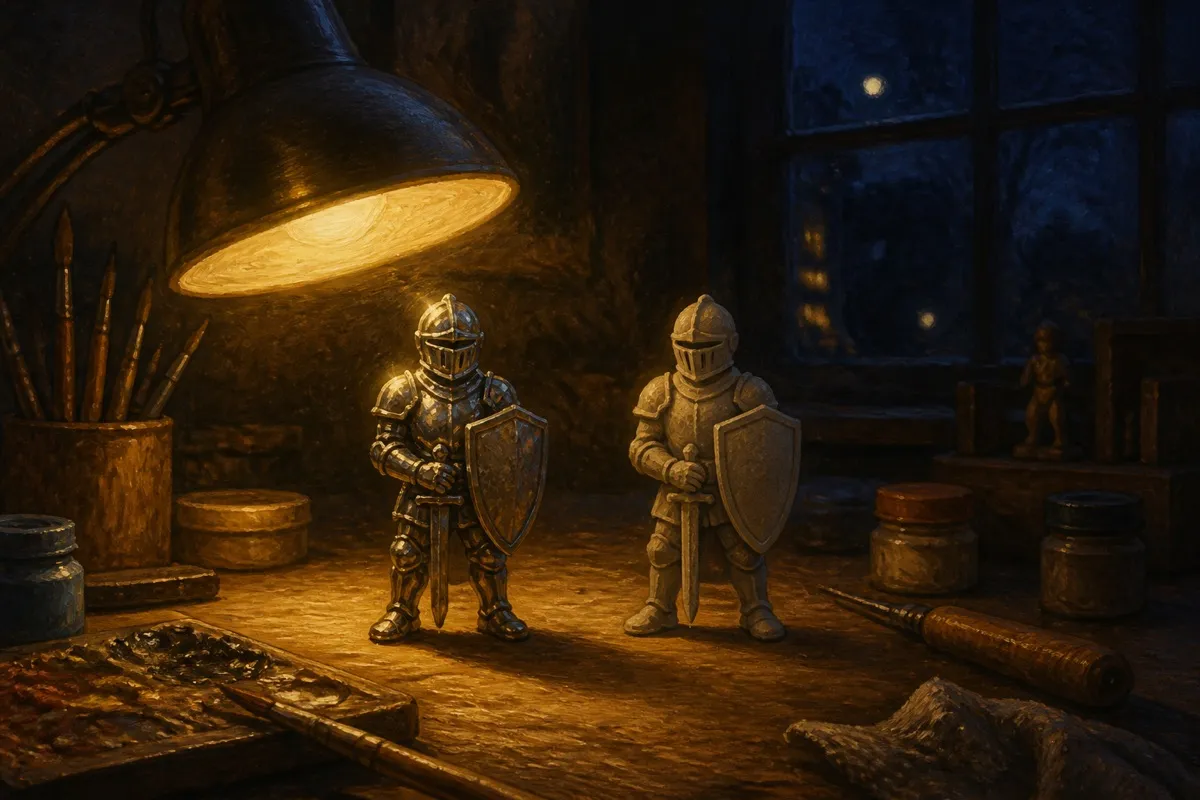
Gloss varnish protects a finished miniature with a shiny, wet-look coat, while matte varnish protects it with a flat, non-reflective finish that reads closer to how the paint looked before sealing. Neither is objectively better: the choice depends on whether you want the model to photograph and display with a slight shine or to sit flat under normal room light like most tabletop armies do.
What Citadel Munitorum Varnish actually is
Munitorum Varnish is Citadel's aerosol spray final varnish, applied as the last step to protect a finished paint job from handling and chipping during games. It goes on as a satin-leaning finish rather than a hard gloss or a fully flat matte. Because it is a spray can, it comes with the shipping and ventilation restrictions any aerosol does, which is why many painters keep a brush-on varnish on hand as an indoor-safe alternative for the same protective job.
Why some painters gloss coat before matting
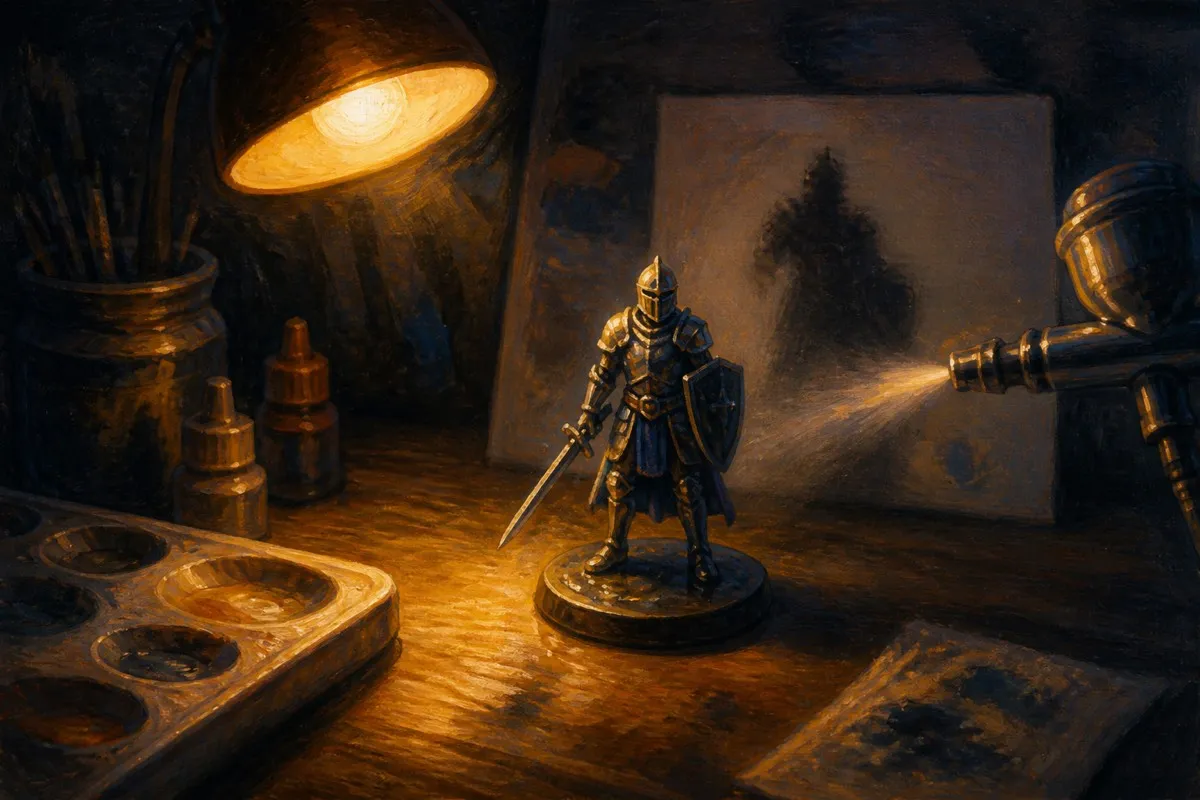
A gloss coat applied before a final matte varnish, sometimes called the gloss-matte-gloss method depending on how many effects layers are involved, keeps washes and glazes looking saturated underneath the flat top coat. Matte varnish scatters light at the surface, which can make deep shadows and metallics look slightly duller than they did before sealing. A thin gloss layer underneath, from something like Citadel's Ardcoat, protects that depth before the matte coat goes on top.
Brush-on alternatives to a spray varnish
The Army Painter's Gloss Varnish and Matt Varnish are brush-on options that do the same protective job as a spray can without the aerosol handling concerns. Two Thin Coats makes gloss, matte, and satin varnishes as well, giving you a middle option between the two extremes if a full matte reads too flat for your taste. Brush-on varnish also means fewer coats wasted to overspray, since you control exactly where it goes.
| Finish | Look | Best use |
|---|---|---|
| Gloss | Shiny, wet-look surface | Display models, protecting glow or glaze effects underneath |
| Satin | Slight sheen, closer to how wet paint looks | A middle ground when full matte feels too flat |
| Matte | Flat, no reflection | Tabletop armies under normal room light |
Testing a varnish before you commit a whole army
Any varnish, spray or brush-on, can react badly with certain paints, most often producing a hazy or frosted patch called varnish bloom. It shows up more often with spray cans used in humid conditions, but a brush-on varnish is not immune either if applied too thick. Test any new varnish on a single spare model, ideally one with a similar mix of metallics, washes, and flat colors to the army you are about to seal, before you run it across a whole unit. Let the first coat cure fully and check it under normal light the next day rather than judging it wet.
How many coats does a varnish actually need
One thin coat is usually enough for a final protective layer, whether brush-on or spray. A second thin coat can help even out coverage on a model with a lot of texture, since recesses and edges tend to take less varnish than flat panels on a single pass. Thick single coats are more likely to pool in recesses and dry with visible texture, which is the most common mistake painters make moving from a spray can to a brush-on varnish for the first time, since a brush naturally deposits more product per pass than a fine spray does.
FAQ
Should I gloss coat before applying a matte varnish?
Only if the model has glazes, glow effects, or deep washes you want to keep looking saturated. For a straightforward paint job without those effects, a single matte coat is enough.
Can matte varnish ruin metallics?
Matte varnish can dull the shine on metallic paint, since it scatters light at the surface the same way it flattens any other finish. A satin varnish or a thin gloss coat first preserves more of the metallic sparkle if that matters for the model.
Is brush-on varnish as protective as a spray can?
Yes, when applied in thin, even coats. Brush-on varnish is easier to control in small areas and avoids the overspray and ventilation issues of an aerosol, though it takes longer to cover a whole model than a spray can does.
What is AK Interactive's matte varnish like compared to Citadel's?
AK Interactive also sells a dedicated matte varnish in their range, aimed at the same flat, glare-free finish as Munitorum Varnish. Formulas differ between manufacturers, so if matching sheen matters, test on a spare model before committing to a full army.
Do I need both a gloss and a matte varnish?
Most painters end up keeping both once they start using glow effects or metallics regularly. If you paint mostly flat, non-metallic tabletop miniatures, a single matte varnish covers nearly everything.
Shop brush-on matte varnish(affiliate link) and brush-on gloss varnish(affiliate link) if you want an indoor-safe alternative to a spray can finish.