
Green Stuff World built a large part of its reputation on basing and groundwork tools rather than paint, and the two most useful categories for a painter finishing models are texture rolling pins and static grass tufts. A rolling pin presses a repeatable pattern, like cobblestones, wood planking, or cracked earth, straight into greenstuff or air-dry clay before it cures. Tufts are pre-made clumps of static grass or foliage on a self-adhesive base that drop straight onto a finished, painted base for instant, consistent vegetation without hand-applying loose static grass fiber every time.
What a texture rolling pin actually does
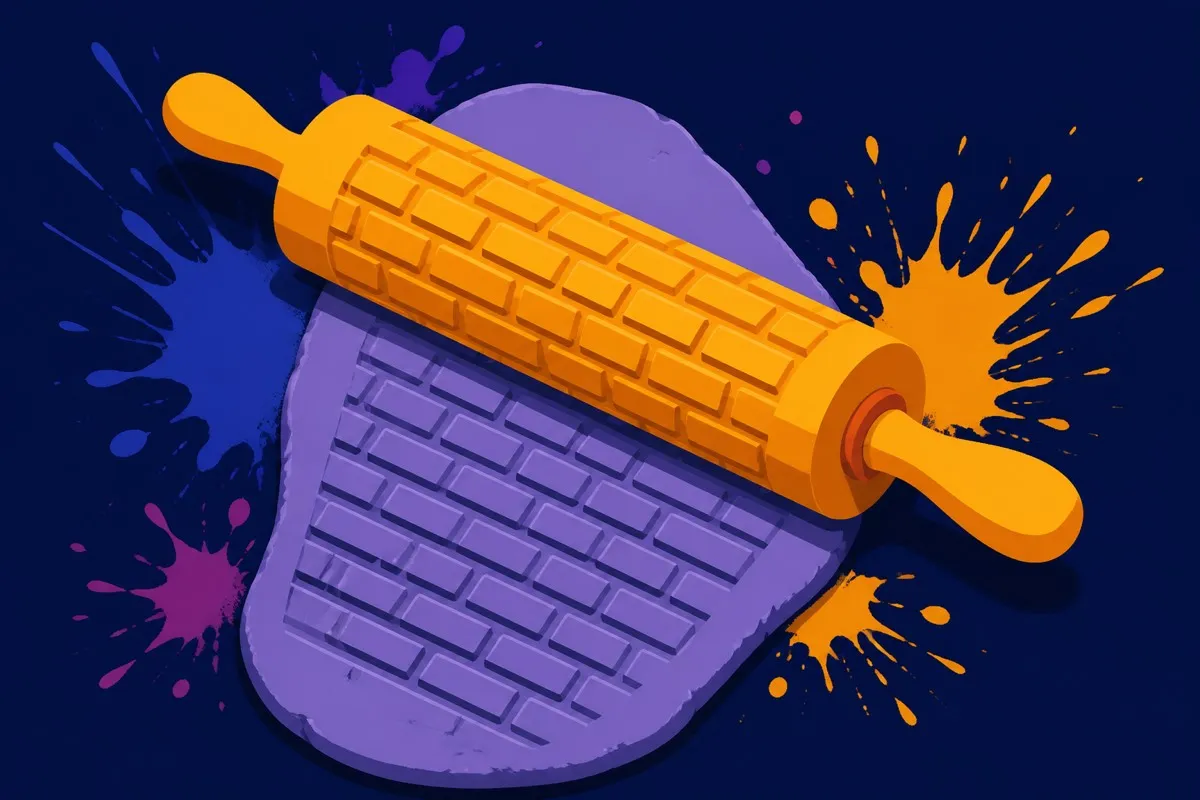
A texture roller is a small cylinder, often resin or hard plastic, engraved with a repeating pattern. Rolled across a flat layer of greenstuff (see the pro uses guide for green stuff for the wider modeling material, not the brand), air-dry clay, or similar modeling material before it sets, it presses that pattern into the surface in seconds, the same idea as a cookie cutter but for surface texture instead of a shape. Cobblestone, plank, brick, and cracked ground patterns are the most common, and the appeal over hand-sculpting the same texture is consistency: every roll produces the same spacing and depth, which matters if you are basing a full squad or army and want the ground texture to read as one continuous surface rather than ten slightly different attempts.
The technique itself is simple but has a narrow working window. Roll too early and the material is too wet, the pattern smears rather than presses. Roll too late and the material has started to skin over, the pattern comes out shallow or tears the surface. A thin coat of water or a release agent on the roller itself keeps material from sticking to the tool and pulling the texture back up as you lift it away.
What static grass tufts solve
Applying loose static grass by hand with an applicator gives you control but takes real time to get consistent, especially across a full unit of bases that need to look like they belong to the same battlefield. A tuft is that same static grass fiber already bundled and shaped, sitting on a thin self-adhesive foam or paper base, so finishing a base becomes press and done rather than a multi-step static application process. For a single showcase model, hand-applied loose grass with more deliberate placement often looks better. For basing an entire army where speed and consistency matter more than a single perfect base, tufts are the faster and more repeatable choice.
| Tool | Solves | Best for |
|---|---|---|
| Texture rolling pin | Repeatable surface pattern in soft material | Cobblestone, plank, and cracked earth bases at scale |
| Static grass tufts | Fast, consistent vegetation | Full unit or army basing where speed matters |
| Loose static grass and applicator | Full control over placement and density | Single showcase or display models |
Building a basing workflow
A practical order that keeps materials workable: sculpt or apply the base material first, roll the texture in while it is still soft, let it cure fully, prime and paint the groundwork using the same step by step painting approach you would use on the model itself, then add tufts and any static grass last so they sit on top of finished paint rather than getting buried under a wash or drybrush pass. Painting the texture before adding vegetation also means a spilled wash or an overzealous drybrush stroke will not ruin a tuft you already placed.
If your current basing setup is still loose static grass applied by hand with no consistent tool, a rolling pin is worth adding first since it changes the base material itself, which every other basing step then builds on. Tufts are the easier add-on afterward once your groundwork texture is where you want it.
FAQ
Do texture rolling pins work on greenstuff or only air-dry clay?
Both, as long as the material is still soft and workable. Greenstuff has a shorter working window before it firms up, so plan the roll into your working time rather than mixing a batch and doing other steps first.
Can I reuse static grass tufts if I misplace one?
Once pressed onto wet glue or a tacky base coat, tufts are difficult to remove cleanly without damaging the fibers. Test placement dry before committing to glue.
What is the difference between static grass and a tuft?
Static grass is the loose fiber itself, applied with an applicator that gives it an upright, charged look. A tuft is that same fiber pre-bundled onto a small adhesive base for one-step placement.
Do I need a special glue for tufts?
A standard PVA or white glue works for tufts the same way it does for loose static grass. Some tufts include their own adhesive backing and only need pressure to seat.