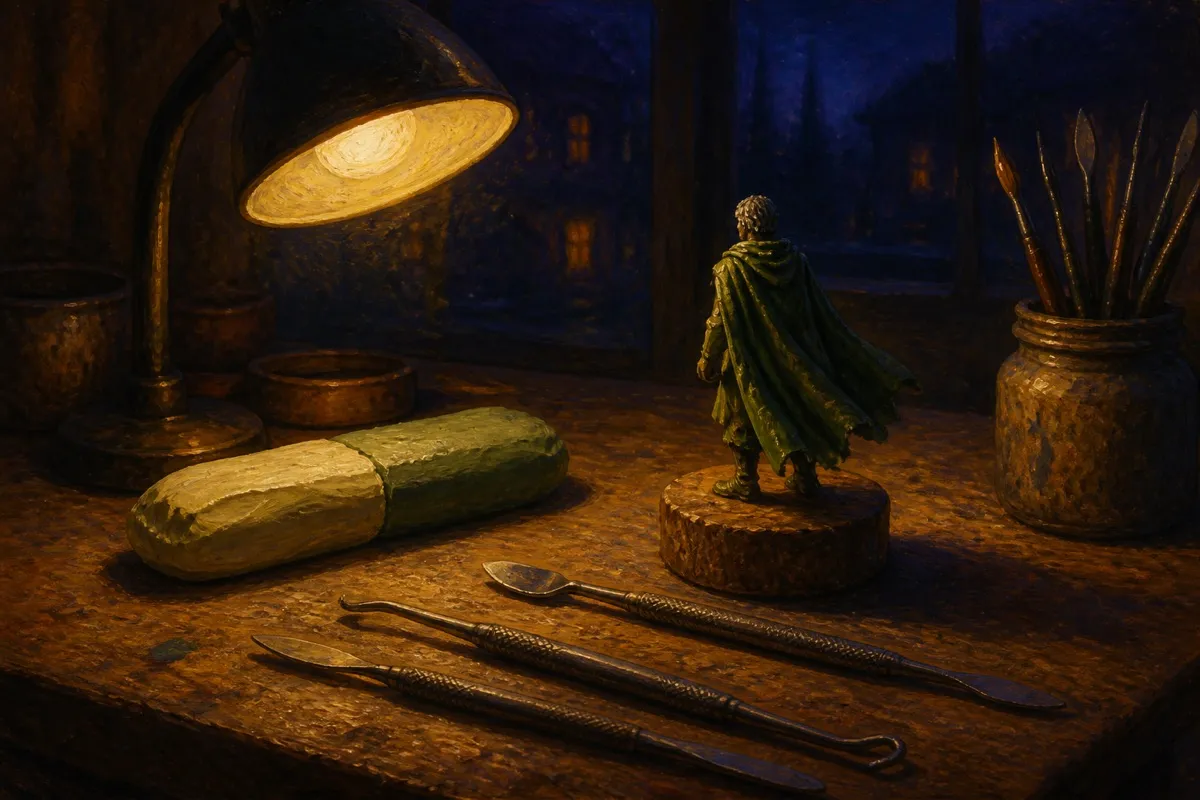
Green stuff is a two-part epoxy putty, sold under the Kneadatite name, that hardens into a firm, sandable material after you knead equal parts of its yellow and blue strips together. Miniature painters use it for sculpting, gap filling, and basing because it cures rock hard, holds fine detail, and bonds to plastic, resin, and metal.
The name causes confusion because the cured color is a dull olive green, not because any single product is officially called "Citadel Green Stuff." It is a generic term for the epoxy putty regardless of brand, the same way "super glue" covers a dozen manufacturers.
What is green stuff actually made of
Green stuff is Kneadatite, a two-part epoxy putty. One strip is a yellow catalyst, the other a blue base. You cut equal lengths of each, knead them together until the color is uniform with no streaks, and you get roughly 45 minutes to an hour of working time before it starts to firm up. Full cure takes about a day, faster in warm weather.
The blue and yellow strips mixing to green is where the name comes from. It is not a paint and it never goes through the converter or paint catalog on this site. Treat it as a modeling material that sits alongside your paints, not a color in your kit.
Blue stuff vs green stuff: what actually changes
Blue stuff is a reusable silicone putty used to make molds, not a sculpting material itself. You press a sculpted original into blue stuff, let it set, then cast duplicate parts in green stuff or resin from that mold. The two are complementary, not competing products. If your goal is one-off sculpting or gap filling, you want green stuff alone. If your goal is duplicating a part you already sculpted, blue stuff is the mold material and green stuff (or a resin) is what fills it.
8 pro uses for green stuff on miniatures
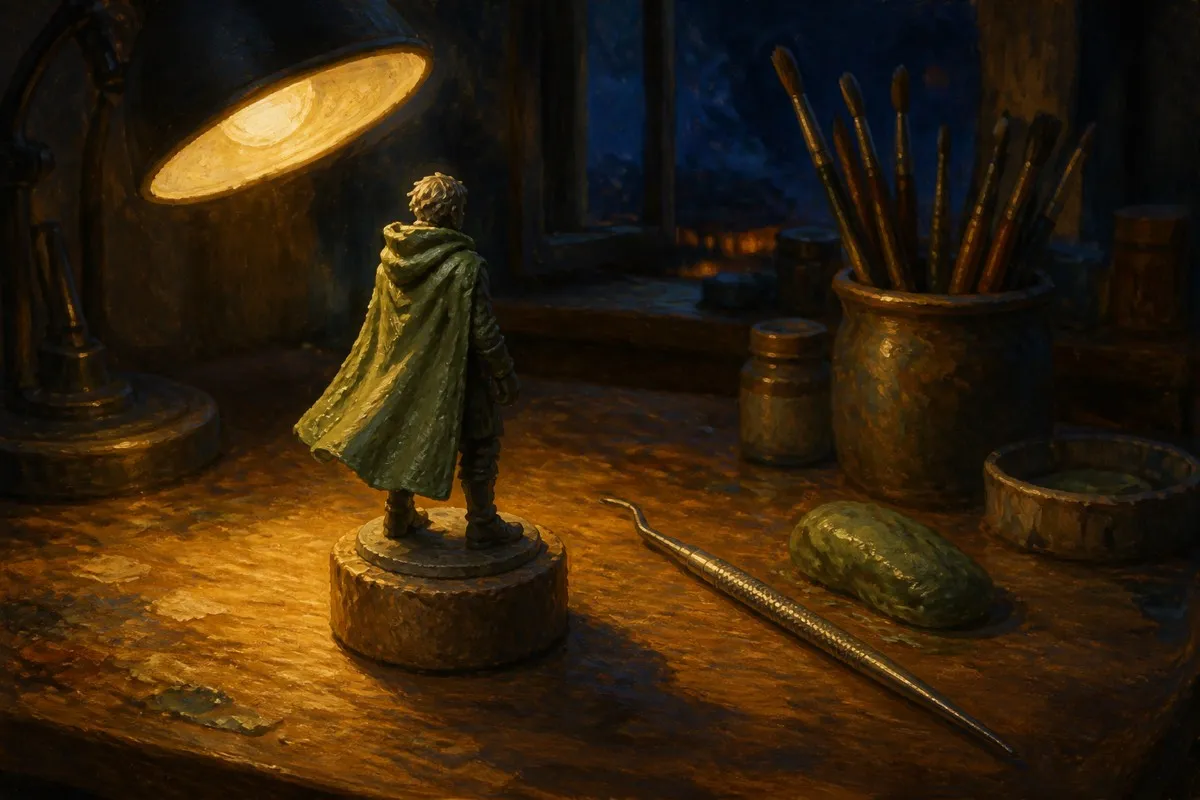
1. Filling mold lines and seams. A thin sausage of green stuff pressed into a seam, smoothed with a wet tool, and left to cure removes the line permanently instead of just sanding it thinner.
2. Sculpting freehand details. Cloaks, pouches, fur trim, and other additions get built up in thin layers rather than one large blob, since thin green stuff cures more evenly and holds sharper edges.
3. Basing texture. Rolled thin and pressed onto a base, green stuff takes stamped texture (cobblestone, wood grain, scales) from a silicone push mold before it hardens.
4. Repositioning limbs. Cutting a joint, repositioning it, and packing the gap with green stuff both fixes the pose and hides the cut.
5. Building custom bases. Rubble, roots, and terrain details sculpted directly onto a base give a squad a unified, non-repeating look.
6. Smoothing miscasts. Air bubbles and short-shot resin parts get filled and re-sculpted rather than the whole part being scrapped.
7. Adding scale texture and armor plates. A rolled sheet cut into strips and layered onto a model creates scale mail or armor plating that plastic kits do not offer out of the box.
8. Making custom bits. Horns, skulls, and small ornamental details get one-off sculpted rather than sourced from a bits box, then optionally molded in blue stuff for reuse.
Working tips that actually matter
Wet your tools and fingers with water or a drop of petroleum jelly before handling green stuff so it does not stick and tear. Work in small batches since a little goes a long way and unused mixed putty cannot be saved once the two parts combine. A silicone-tipped sculpting tool keeps edges clean where a metal tool would drag.
FAQ
Is green stuff the same as Kneadatite?
Yes. Kneadatite is the epoxy putty most painters call green stuff. Other brands sell equivalent two-part epoxy putties under different names, and the term has become generic for the category.
What is a green stuff alternative?
Milliput and Apoxie Sculpt are the two most common alternatives, both two-part epoxy putties with slightly different working times and finished hardness. Painters pick between them mostly on personal feel and cure speed rather than any dramatic performance gap.
Does green stuff work on resin and metal, not just plastic?
Yes. It bonds to plastic, resin, and metal miniatures as long as the surface is clean of mold release and dust. A light scuff with fine sandpaper improves the bond on smooth resin.
How long before I can paint over green stuff?
Give it a full day at room temperature. It is workable within the hour but not fully cured, and paint applied too early can crack the surface as the putty keeps hardening underneath.
Can green stuff be sanded once cured?
Yes, cured green stuff sands cleanly with fine grit paper, which is how most painters blend a fill into the surrounding plastic or resin seamlessly.
Once you have filled and sculpted, everything downstream is a paint job. Browse Citadel if you want a range built for the same miniatures this putty is usually used on, check the Citadel Base range for a foundation color to cover a repair, and see Corax White as a common primer-adjacent basecoat over green stuff repairs before painting begins.
Grab Kneadatite green stuff epoxy putty(affiliate link) and a silicone sculpting tool set(affiliate link) to get started.