
Basing materials are the small stock of textures, grasses, and rocks that turn a plain plastic disc into a scene the model looks like it is standing in, and the short list of essentials covers most terrain types: static grass for ground cover, basing rocks for rubble and outcrops, texture paste or sand for dirt, and static grass tufts for pre-clumped foliage you place by hand instead of shaking loose.
The core materials and what each one does
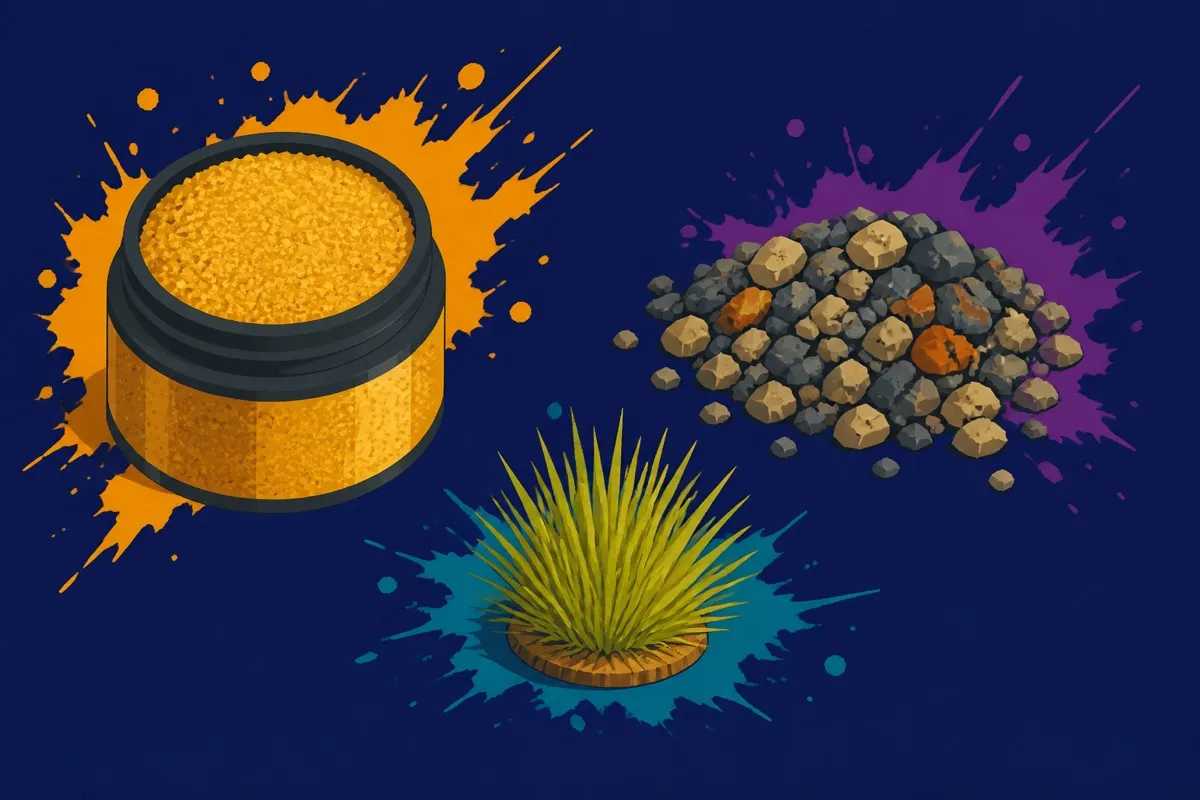
Static grass is the workhorse for any outdoor base. It comes as loose fibers in various lengths and colors, applied with glue and an electrostatic grass applicator(affiliate link) that stands the fibers upright instead of letting them lie flat, which is what makes a grass base look like actual growth rather than green fuzz. Shorter fibers read as mown lawn or scrubby ground, longer fibers read as overgrown fields or battlefield ruin.
Basing rocks and rubble give a base visual weight and break up flat texture. Small aquarium-grade gravel works as well as hobby-branded rock mixes, and a mixed size range looks more natural than uniform pebbles. Citadel's own texture paints, like Armageddon Dust and the mud and cracked-earth effects in that same line, are a shortcut version of the same idea: a paintable texture medium that dries into a rough ground surface without needing separate sand and glue steps.
Static grass tufts are pre-made clumps of grass, sometimes mixed with small flowers, glued onto a thin foam pad. They are the fastest way to add believable clustered foliage, since hand-placing three or four tufts around a base looks more deliberate than an even scatter of loose static grass everywhere.
Layering a base so it reads as a scene
The order matters more than the individual materials. Texture or sand goes down first over glue, while the surface is still tacky, so the coarse material actually bonds instead of sitting loose. Once that layer is dry and painted, static grass and rocks go on top as accents rather than a full covering. A base that is one hundred percent grass or one hundred percent rock reads as monotonous. Leaving visible painted ground between grass patches and rocks is what sells the scene as a real patch of earth rather than a craft project.
Painting the texture before adding grass also matters, because static grass fibers are difficult to paint around once glued down. Basecoat and wash the exposed ground first, using an earth-toned Citadel Base or Vallejo color for the underlying dirt, then add grass and tufts as a final step so their color stays clean. The Vallejo brand hub covers that range's earth and stone tones if you need a starting palette for ground color.
Matching basing materials to the miniature's army
Faction color schemes tend to have expected basing conventions. Fantasy-adjacent stone and mordant-earth style bases suit dark, muted schemes; sci-fi and battlefield rubble bases with cracked plating and scorch marks suit a grittier scheme. Citadel sells named basing texture paints built around specific themes, like Mordant Earth and Agrellan Badland, and pairing the base's material with the model's paint scheme, rather than treating basing as an afterthought, is the difference between a base that supports the model and one that competes with it. Our oil washing and drybrushing guide covers weathering the finished base once materials are down, which is often what pulls rock, texture, and grass into one cohesive color.
FAQ
What basing materials does a beginner actually need?
A tub of static grass in one color, a small pot of basing rocks, and a texture paste or sand for ground cover covers most standard bases. Tufts are a worthwhile add once you want faster, more deliberate placement.
Do I need an electrostatic applicator for static grass?
Static grass can be pressed on by hand, but it lies flat and looks matted without an applicator. The electrostatic charge is what stands the fibers upright and gives grass its realistic texture.
What order should basing materials go on?
Texture or sand first while the glue is tacky, then paint the ground, then add static grass and tufts last so their color stays clean and the coarse layer has actually bonded.
Can Citadel texture paints replace separate sand and glue?
Yes, for a simpler workflow. Citadel's texture paint line applies a rough ground texture in one paintable step, though loose static grass and rocks still give more control over the final look.