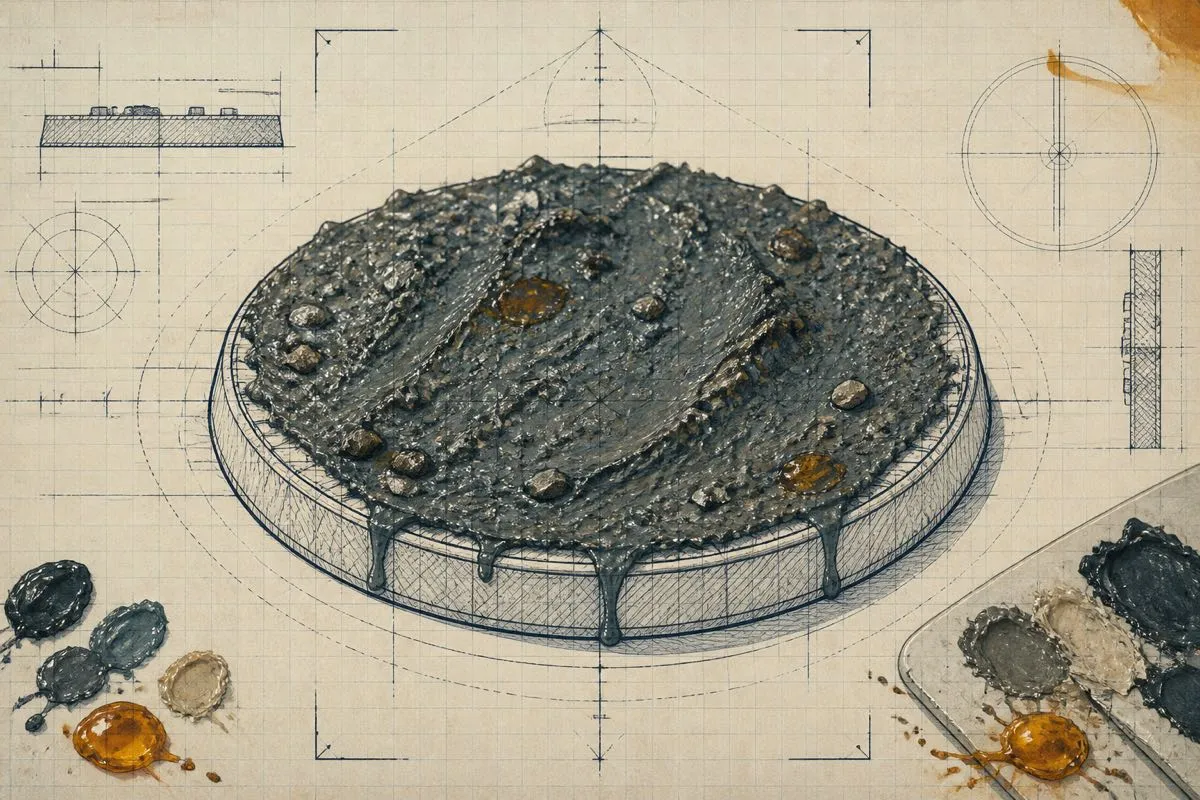
Citadel's texture paints are basing pastes, not regular colors: they go on thick straight from the pot, dry with actual physical texture, and are meant to be applied to the base rim before you paint anything else. Agrellan Earth is the one most painters start with because it dries into a convincing dry, cracked mud effect on its own with no extra steps.
The confusion usually comes from treating these like normal paints, thinning them, or expecting one product to do every kind of ground. Each texture paint is built for a specific look, and picking the wrong one means redoing a base after the fact.
What does each texture paint actually look like when dry?
Agrellan Earth and Agrellan Badland both dry with a cracked, parched-earth pattern, the difference being tone: Agrellan Earth is a warmer tan, Agrellan Badland leans more grey-brown. Astrogranite gives a fine, even gritty texture closer to packed gravel or tarmac, with none of the cracking. Stirland Mud is thinner and stays smoother, built to look like wet, churned ground rather than dry cracked earth. Martian Ironearth and Martian Ironcrust both dry into a coarser, rustier rubble texture, closer to broken rock or industrial debris than soil. Armageddon Dust is the loosest of the set, a fine sandy texture meant to sit under other basing materials rather than stand alone.
How thick should texture paint go on?
Straight from the pot with a palette knife or old brush, applied in a layer thick enough to actually crack or texture as it dries, usually a couple of millimeters. Thinning it with water defeats the product: it needs to dry slowly and unevenly to crack, and a thinned layer just dries flat like a normal paint. Let it cure fully, generally overnight, before handling the base or the texture can chip off the edges.
Do texture paints need a separate basecoat first?
No. Most of these are self-colored and can go directly onto a bare base, which is the entire point: prime the base if you want, apply the texture paint, and it is functionally finished once dry, ready for a light drybrush highlight if you want more depth. That is faster than the old method of gluing sand and painting over it in three separate steps.
Can I mix texture paints with sand or grit for more variation?
Yes, and it is common practice: press a little fine sand or grit into wet Astrogranite or Armageddon Dust before it sets for a rougher, less uniform look, then drybrush over the top once dry.
How do you finish a base once the texture paint has dried?
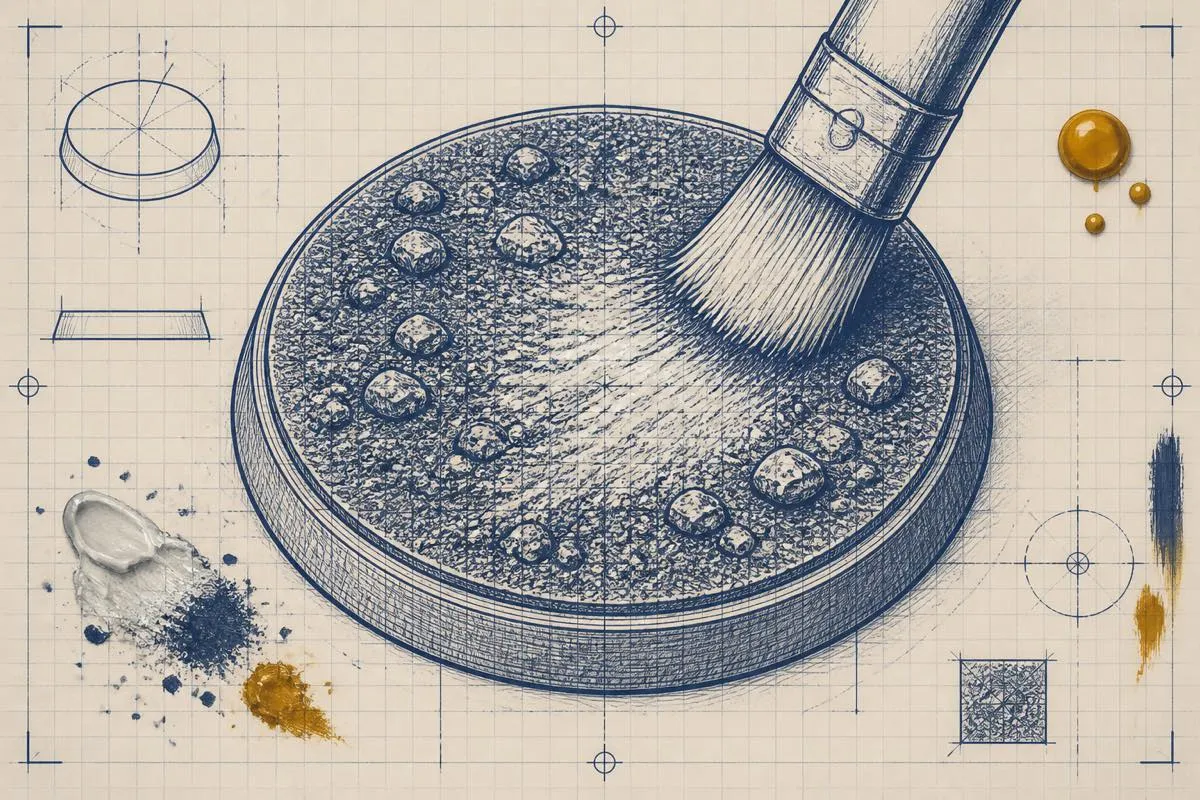
A light drybrush in a color a couple of shades lighter than the texture paint brings out the raised detail without repainting the whole thing, since the drybrush only catches the highest points of the crackling or grit. Static grass, tufts, or small resin details can go on after that, glued directly to the cured texture with a standard PVA or superglue depending on the material. Matching the base finish across a whole army is mostly about using the same one or two texture paints consistently rather than mixing several different products model to model.
For every current color in the range with swatches, see the Citadel Technical range page. A liquid primer(affiliate link) underneath still matters even on a textured base, since the paint needs a clean surface to grip.
FAQ
What is the difference between Agrellan Earth and Astrogranite?
Agrellan Earth dries with visible cracks like dry mud. Astrogranite dries as an even fine grit with no cracking, closer to gravel or rough concrete.
Do I need to seal texture paint after it dries?
Not usually. These are acrylic and reasonably durable once cured, though a matte varnish over the whole base along with the model protects it from handling wear the same as any other painted surface.
Can texture paint go over an already-painted base?
It is best applied to a bare or primed base before the model is glued down, since the thick coat needs to bond directly to the surface and can pull at existing paint layers as it cures.
Will texture paint crack off if I drop the model?
A thick, properly cured layer holds up to normal handling. Very thin or unevenly applied texture is the usual cause of chipping at the base edge.
Are these paints different from static grass or flock?
Yes. Texture paints are a paste that creates the ground surface itself; static grass and flock are separate materials glued on top afterward for extra detail.