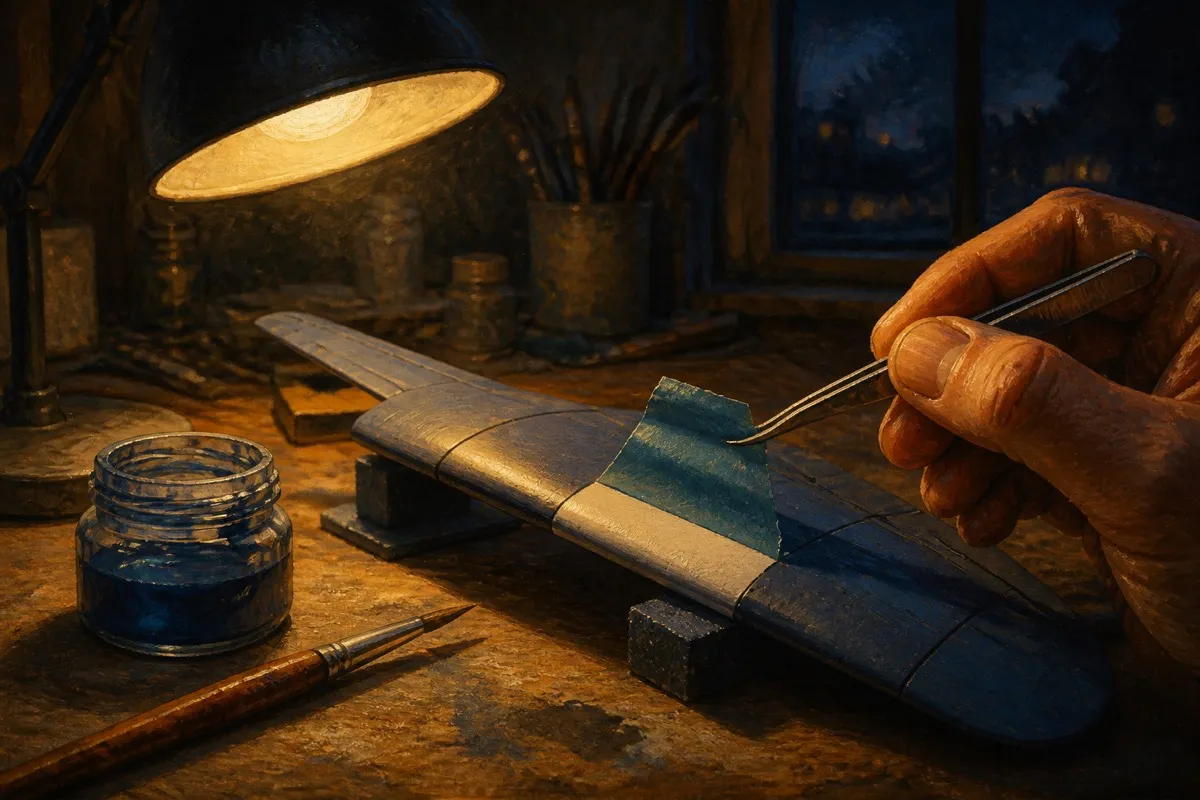
Liquid mask is a latex or acrylic fluid you paint on, let dry into a peelable film, then remove after spraying or painting over it, and it earns its place on a miniature painter's desk for exactly the jobs tape cannot handle: curved surfaces, small awkward shapes like lenses and gems, and any area too tiny to cut a clean piece of tape for. Tape still wins for straight edges and large flat panels. Liquid mask wins wherever the shape is irregular.
How liquid mask actually works
Liquid masking fluid(affiliate link) goes on as a thin, usually colored, fluid brushed directly onto the model where you want to protect the existing paint or bare plastic. Left to dry fully, it forms a thin rubbery film that resists the next layer of paint or primer sprayed over it. Once that layer is dry, you peel or rub the mask away with a fingertip or a piece of tape pressed onto it, pulling the film off and taking the overspray with it, and leaving the protected area exactly as it was underneath.
The color tint most liquid masks are sold in is not decorative. It exists so you can see where you have and have not covered while it is still wet, since the fluid dries close to transparent on some surfaces and a colored version prevents gaps in coverage that only show up after the top coat goes on.
Where it beats tape on a miniature
Eyes, gems, canopy glass, glowing effects, and any small recessed detail are the classic uses, because cutting tape to that shape is either impossible or takes longer than the masking job is worth. Liquid mask also conforms to curves that tape bridges over and leaves gaps under, which matters on organic shapes like a model's face or a rounded shoulder pad where a straight tape edge would let overspray creep underneath.
It is a poor choice for long straight lines, like the boundary between two panels on a vehicle or a clean stripe down an arm, where a strip of tape gives a crisper, faster edge than trying to freehand a liquid mask line with a brush.
Application and removal without losing the paint underneath

Apply liquid mask to a fully cured layer of paint, not a wet one, since the mask can lift or blend into paint that has not finished curing. Two thin coats of the mask itself, rather than one thick one, dry more evenly and peel off in a single piece instead of tearing.
Do not let the mask sit for days before removing it. Most formulas get harder to peel cleanly the longer they cure, and an old, brittle mask is more likely to tear and leave stray flakes stuck in recesses. Peel it off as soon as the layer you sprayed over it has dried, using a fingertip for control on small areas rather than tweezers, which can gouge the paint if the tip slips.
If you are using liquid mask on an airbrushed scheme, the same prep and cleanup habits from airbrushing generally apply: the model surface should be clean and dry before the mask goes on, and our airbrush kit roundup and zenithal priming guide both cover the layered spraying technique that liquid masking is most often paired with, since zenithal schemes rely on protecting earlier layers while later ones go on. The Vallejo brand hub covers that brand's airbrush-ready primer and paint lines if you are setting up a masked scheme from scratch.
FAQ
Can liquid mask damage the paint underneath?
Applied over fully cured paint and peeled off promptly, liquid mask should not lift the layer underneath. Peeling too soon after applying it, or leaving it on for days, raises the risk of pulling paint with it.
Is liquid mask better than tape for miniatures?
Neither is universally better. Tape suits straight edges and flat panels, liquid mask suits curves, small details, and irregular shapes that tape cannot follow cleanly.
How long does liquid mask need to dry before spraying over it?
Let it dry fully to a rubbery, tack-free film before spraying, usually a short wait rather than an overnight cure, though exact times vary by product and humidity.
Can I paint liquid mask by hand instead of using a brush?
A fine brush gives the most control for small detail areas. A cocktail stick or fine applicator works for very small dots, like individual gem facets, where even a fine brush is too broad.