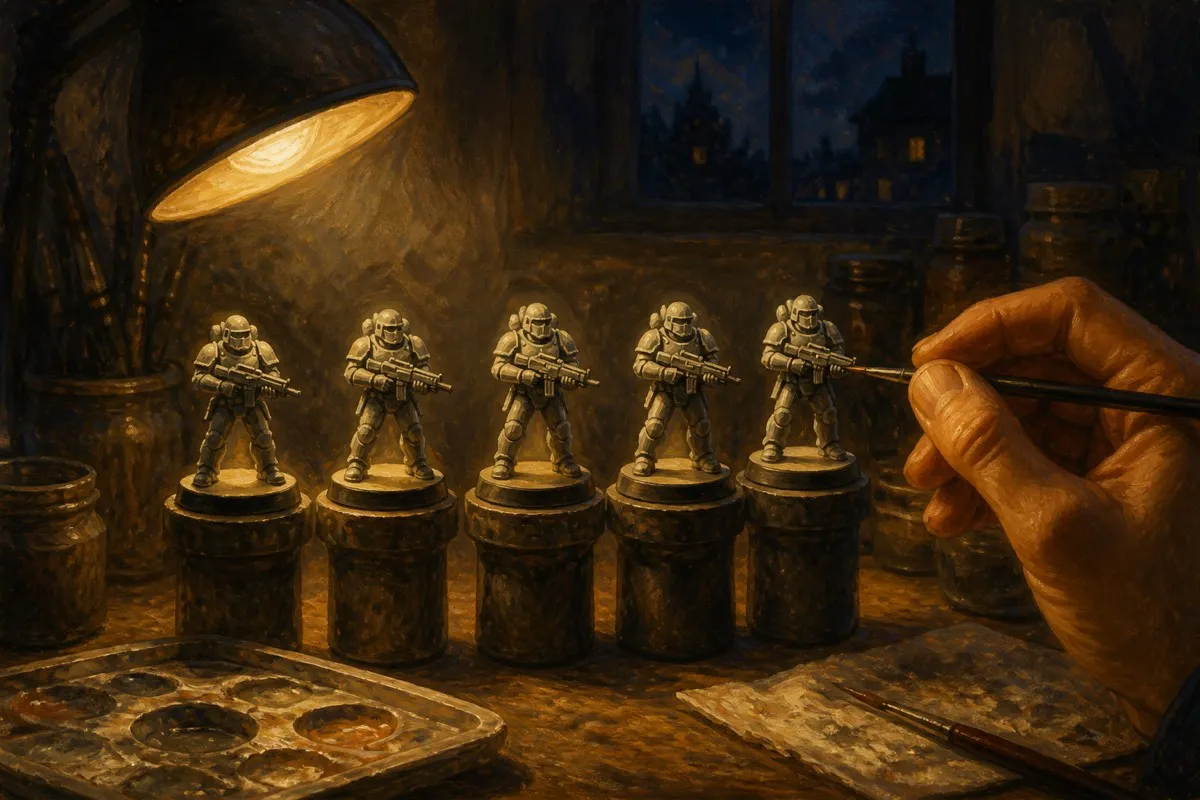
Batch painting an army fast means working one step across every model before moving to the next step, rather than finishing one model completely before starting the next. Prime every model, then base coat every model, then wash every model, then highlight every model, in that order. The time saving comes from staying in one paint and one motion for a long stretch instead of constantly switching colors and mindsets between individual models.
Why the assembly line order works
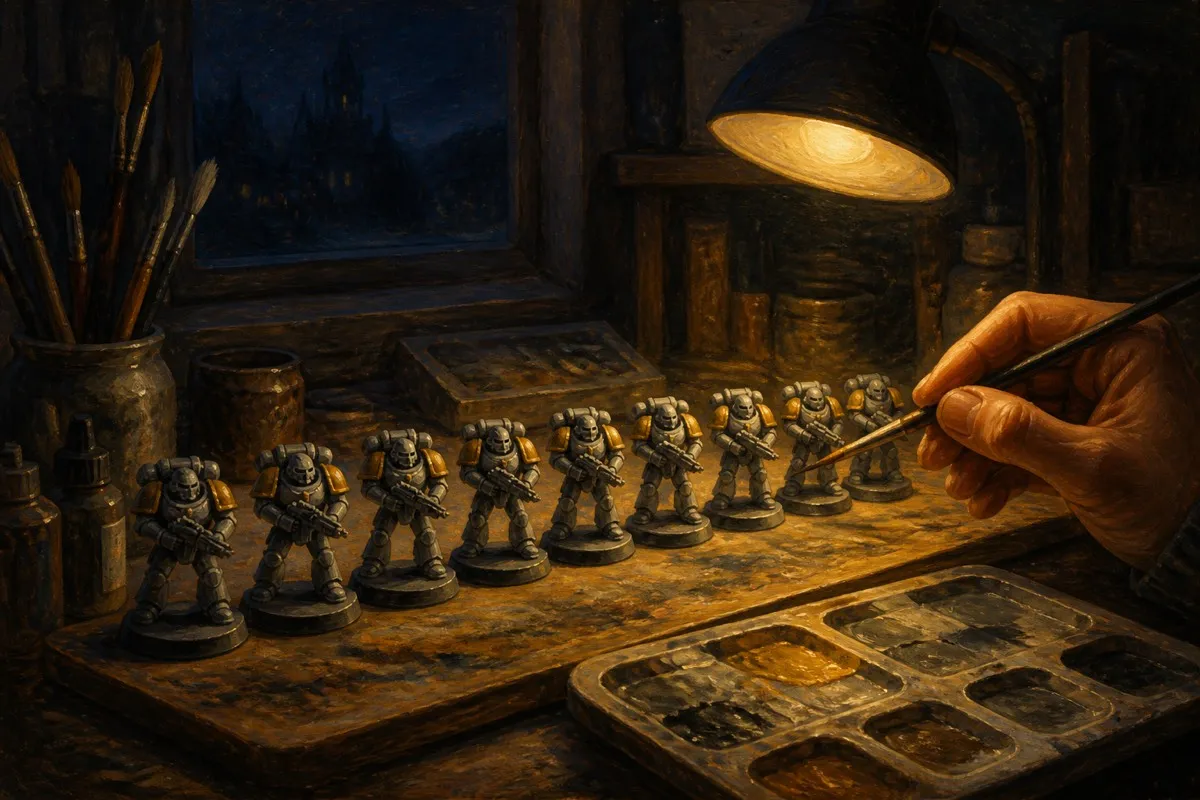
Painting one model start to finish before touching the next feels natural, but it means reloading your brush with a new color for every single step on every single model, which adds up to a huge amount of setup time across a unit of ten or twenty figures. Working in passes, one color or one step across the whole unit at once, means you load a brush or airbrush once and use it continuously until that step is done everywhere. The paint itself does not go any faster. The switching overhead is what disappears.
This only works if you plan the color order before starting, since jumping back and forth between passes defeats the purpose. Write out the full paint list in the order you will apply it, largest area colors first, before you touch a single model.
Where an airbrush earns its keep
Base coating and priming are the two steps where an airbrush saves the most time in a batch, since spraying an even coat across ten models takes roughly the same time as spraying one, while brushing the same coat individually multiplies with every model added. A basic airbrush and compressor starter kit(affiliate link) pays for itself fastest on exactly this kind of bulk base coating, even if you still hand paint the detail work afterward. The full airbrush and compressor breakdown covers which setup is worth buying first.
Zenithal priming is worth doing at the batch stage too, since it sets up shading for the whole unit in the same two passes it would take for one model, and every model in the batch benefits from the built-in light and dark gradient before a single color goes on.
Where a fast-shading paint line earns its keep
Washes and one-coat shading paints like Army Painter Speedpaint compress the highlight and shadow step into a single pass across a whole unit, instead of a separate wash step followed by a separate highlight step. For units viewed at tabletop distance rather than up close, that single pass often reads well enough to skip further highlighting entirely, which is the single biggest time saver available after the base coat itself.
| Step | Batch approach | Time saved by |
|---|---|---|
| Prime | Airbrush the whole unit at once | One spray session instead of many |
| Base coat | Airbrush or brush in one continuous pass per color | No reloading brush per model |
| Wash / shade | One pass across the whole unit | Skips a separate highlight step for tabletop standard |
| Highlight | Only where the unit needs it up close | Reserved for characters and unit leaders |
| Basing | Batch glue sand, then batch paint | Same motion repeated, no setup per model |
Knowing when to slow back down
Batch painting is the right approach for the bulk of a unit, the ten identical rank and file models that will mostly be seen from across a table. It is the wrong approach for a unit champion, a character model, or anything meant to be a display piece, where the extra time spent on individual highlights and detail actually shows. Most experienced batch painters run two speeds at once: the whole unit gets the fast assembly line treatment, and the one or two standout models in that unit get pulled aside for full individual attention once the batch work is done.
FAQ
How much faster is batch painting than painting one model at a time?
It varies by unit size, but painters commonly report cutting total time by half or more on units of ten or more, since the biggest saving is in reloading brushes and refocusing between colors, not in the paint application itself.
Do I need an airbrush to batch paint effectively?
No, brush based batch painting still saves significant time over finishing one model at a time. An airbrush adds the most benefit specifically on priming and base coating, where spraying a whole unit at once is dramatically faster than brushing each model individually.
Does batch painting make an army look worse than individually painted models?
Not if the highlight and detail work still happens on the models that need it, usually characters and unit leaders. A tabletop-standard batch job on rank and file models reads perfectly well from normal viewing distance.
What is the best paint order for batch painting a large unit?
Largest area colors first, prime through base coat, then wash, then any highlights, working the same color or step across every model before moving to the next. Planning that order before starting is what keeps the whole approach efficient.