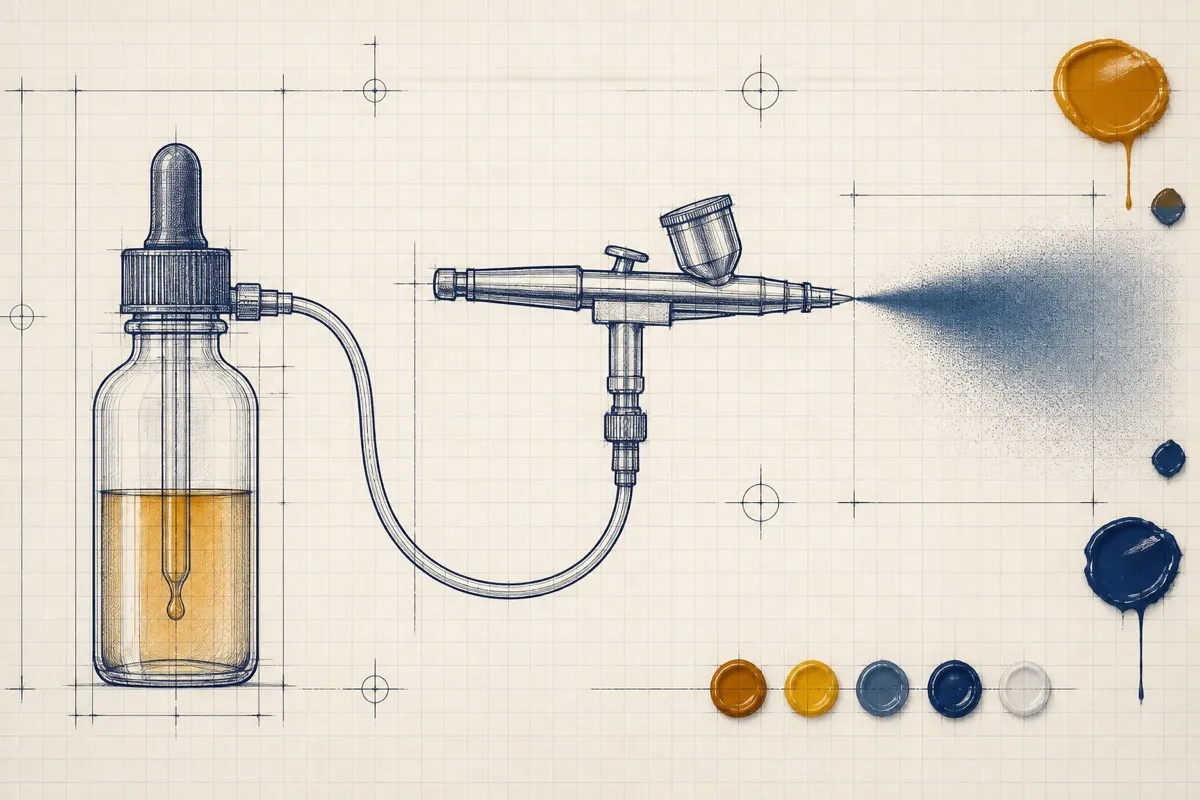
Vallejo Model Air is Vallejo's airbrush ready acrylic line, formulated at a thinner viscosity than their brush painting ranges so it sprays cleanly through a fine nozzle without extra thinning in most cases. It exists because pushing a brush paint through an airbrush usually means thinning it yourself and guessing at the ratio, and Model Air removes that guesswork for painters who want to prime, base coat, or lay down large smooth areas of color with an airbrush instead of a brush.
What makes an airbrush paint different from a brush paint
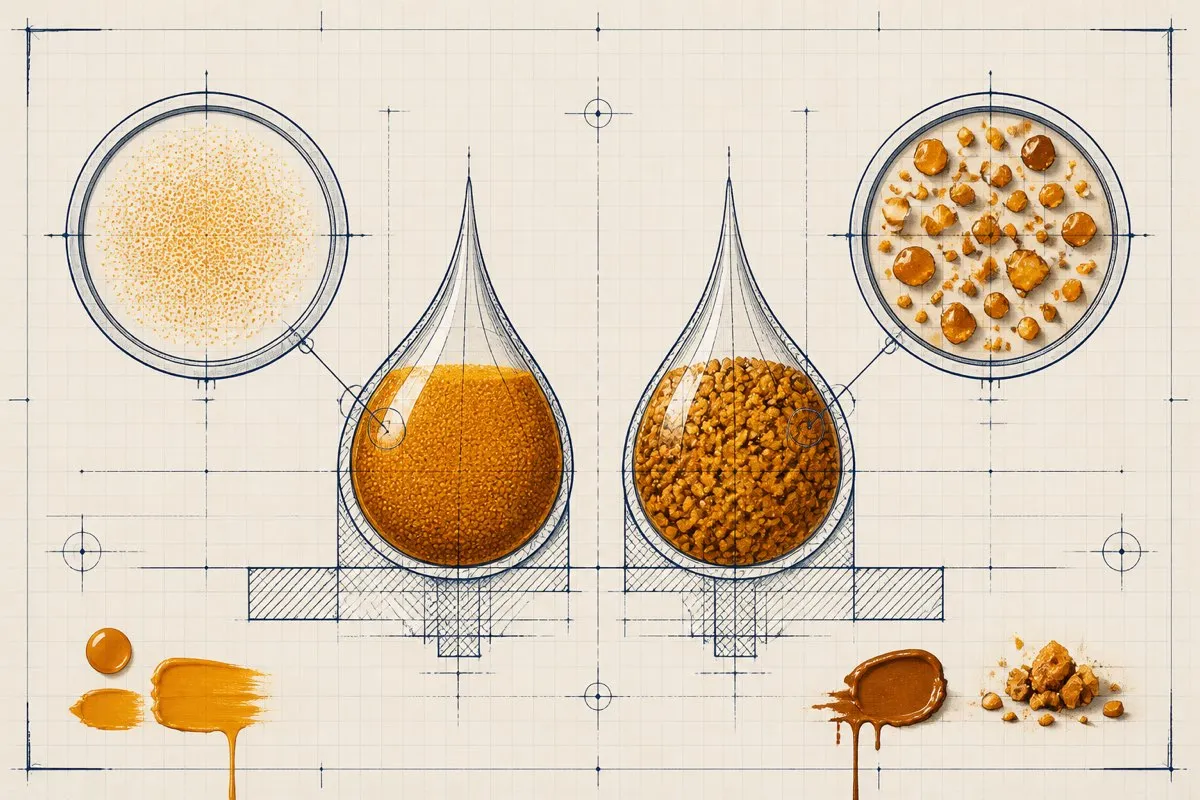
The core pigment in an airbrush line and a brush painting line from the same brand is often close or identical. What changes is the medium, the liquid the pigment is suspended in, which is formulated thinner and finer ground so it can pass through an airbrush nozzle, often as small as 0.2 to 0.4 millimeters, without clogging. Brush paints are thicker by design because opacity and brush control matter more than atomization. That is why simply thinning a brush paint with water or an airbrush thinner gets you most of the way to an airbrush ready consistency, but a dedicated airbrush line is formulated to spray reliably straight from the bottle.
Where Model Air fits against Vallejo's other ranges
We track Vallejo Model Color in full inside our catalog, since it is Vallejo's core brush painting range and the one most cross brand equivalence data exists for. Model Air itself is a separate, dedicated airbrush line and is not yet in our catalog, so we cannot give you a color matched chart for individual Model Air colors here. What we can say with confidence is the practical relationship between the two: many Model Air colors correspond conceptually to colors in the Model Color catalog, reformulated at airbrush viscosity, though the exact bottle to bottle pairing is not something we have verified data for.
If your goal is airbrushing a color that already exists in Model Color, thinning that Model Color paint with a dedicated airbrush thinner is a workable path that keeps you inside a catalog we can already help you cross reference against other brands through the converter.
Model Air versus Citadel Air
Citadel also runs a dedicated airbrush line, Citadel Air, and the comparison is straightforward at a conceptual level even without a formal cross brand match. Both exist for the same reason, thinner ready to spray acrylics, and both are aimed at getting large surfaces or entire models primed and base coated quickly. If you are already committed to one brand's brush paints for the bulk of your painting, sticking with that brand's airbrush line keeps your color language consistent between brush and airbrush work, which matters more than it sounds when you are trying to match a hand painted highlight to an airbrushed base coat later.
| Vallejo Model Air | Citadel Air | Vallejo Model Color, thinned | |
|---|---|---|---|
| Ready to spray from bottle | Yes | Yes | No, needs thinning |
| In our catalog today | Not yet | Yes, Citadel Air | Yes, Model Color |
| Best for | Dedicated airbrush workflows | Citadel painters staying in one brand | Matching a Model Color color exactly |
Getting started with an airbrush line
A basic airbrush setup does not need to be complicated. A single action or dual action gravity feed airbrush, a small compressor, and a cleaning pot cover the essentials for base coating and priming work, such as an airbrush and compressor starter kit(affiliate link). Our beginner airbrush picks and compressor kit rankings both cover equipment in more depth if you are setting up for the first time. Keep an acrylic airbrush thinner(affiliate link) on hand regardless of which airbrush line you choose, and maintain a dedicated cleaning routine between colors, since dried acrylic inside a nozzle is the single most common cause of frustrating clogs for new airbrush users.
FAQ
Can I use regular Vallejo Model Color in an airbrush
Yes, thinned properly. Most painters thin Model Color roughly with an acrylic airbrush thinner until it flows like skim milk, though exact ratios vary by paint and airbrush nozzle size.
Is Model Air the same pigment as Model Color, just thinner
The two ranges share many color families, but they are formulated and bottled as separate product lines rather than a single paint sold at two viscosities, so treat matching colors as close rather than identical.
What nozzle size works for most airbrush acrylics
A 0.3 to 0.35 millimeter nozzle is a common middle ground that handles both fine detail work and larger base coating without clogging as easily as very fine nozzles do.
Do I need a separate cleaner for airbrush acrylics
A dedicated acrylic airbrush cleaning solution flushed through between colors keeps paint from drying inside the nozzle and internal passages, which is the leading cause of airbrush problems for beginners.