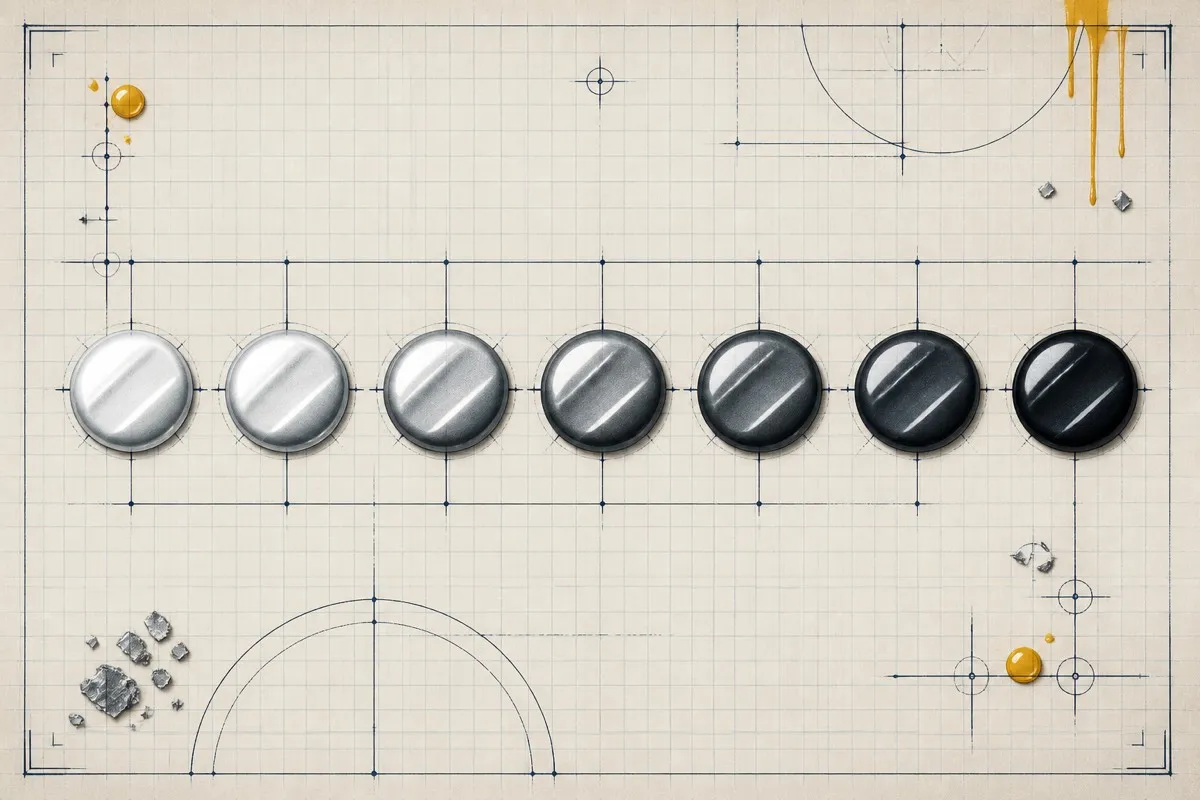
Vallejo does not currently sell its metallics under a dedicated Metal Color line the way some painters expect from the name. Metallic paints are folded directly into Vallejo's two main ranges, Model Color and Game Color, alongside the base and layer colors rather than sold as a separate metallic only product. If you searched expecting a standalone metallic line, this guide covers where those colors actually live and how to pick between them.
Where Vallejo's metallics actually sit
In our catalog, Vallejo carries 24 metallic paints across its two ranges: 14 inside Model Color and 10 inside Game Color. Model Color's metallics lean toward a broader, slightly more muted set including steels and gunmetals suited to historical and scale modeling subjects, while Game Color's metallics are fewer but more saturated, matching that range's general focus on brighter, more contrasty tabletop colors.
| Color | Range | Type |
|---|---|---|
| Gunmetal | Model Color | Metallic |
| Old Gold | Model Color | Metallic |
| Silver | Model Color | Metallic |
| Bronze | Model Color | Metallic |
| Copper | Model Color | Metallic |
| Polished Gold | Game Color | Metallic |
| Glorious Gold | Game Color | Metallic |
| Dark Gunmetal | Game Color | Metallic |
This is a sample rather than the full list, but it shows the pattern: if you want a workhorse metallic for armor, weapons, and trim, Model Color has the deeper bench, and if you want a punchier gold or a saturated bronze for a fantasy scheme, Game Color's smaller metallic set is worth checking first.
Why metallic paint behaves differently from flat colors
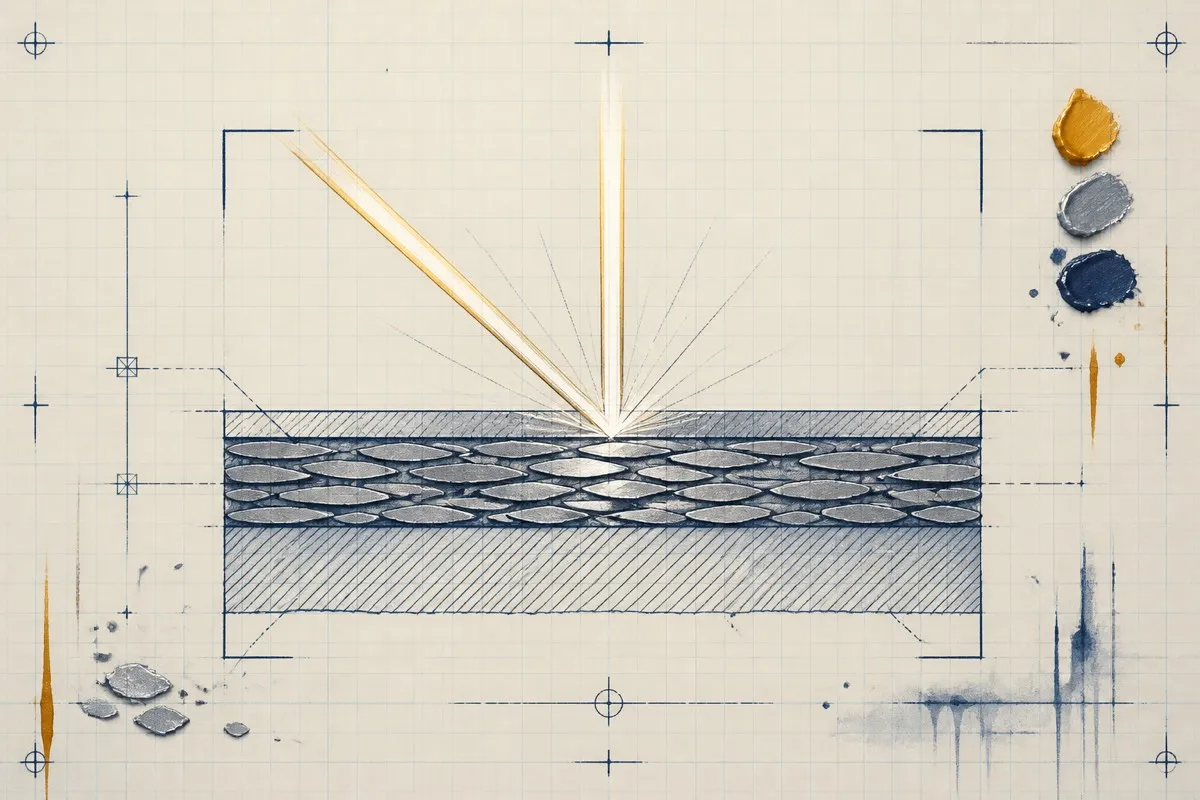
Metallic acrylics suspend tiny reflective particles, usually mica or metal flake, in the same acrylic medium as a standard paint. That changes how thin coats behave: too thin and the metallic flake settles unevenly, leaving a patchy or gritty finish instead of a smooth reflective one. Most painters find metallics benefit from slightly thicker application than a flat base color, and stirring the bottle well before use matters more with metallics than with any other paint type, since the metal particles settle to the bottom faster than pigment does.
Picking a metallic for a specific job
For a true steel weapon or armor plate, Gunmetal is a dependable neutral steel that reads correctly under most lighting. For gold trim, ornate details, or jewelry, Old Gold gives a warmer, slightly aged look compared to a brighter polished gold, which suits weathered or ancient looking subjects better than a mirror finish would. If you are building an entire metallic palette from scratch, a metallic paint set(affiliate link) covering a neutral silver, a warm gold, and a bronze or copper covers the vast majority of trim, weapon, and jewelry needs across most miniature ranges.
Comparing against Citadel's metallics
Citadel runs a larger dedicated metallic selection than either Vallejo range individually, split across its base and layer paints, and painters moving between the two brands sometimes assume a direct one to one swap exists for every color. It usually does not, since the two brands built their metallic ranges independently rather than mirroring each other. If you already own Citadel metallics and want to know how a specific Vallejo color compares, our converter checks the actual match rather than relying on assumption, and the Citadel versus Vallejo comparison covers the broader differences between the two brands.
FAQ
Does Vallejo sell a dedicated Metal Color line
Not currently as a standalone product line. Vallejo's metallics are distributed across Model Color and Game Color rather than sold separately.
How many metallic colors does Vallejo offer
Our catalog lists 24 current Vallejo metallics, 14 in Model Color and 10 in Game Color.
Do Vallejo metallics need a different brush than flat colors
A standard synthetic brush works fine, though many painters keep a separate cheaper brush for metallics since the reflective particles can wear bristles and are harder to fully rinse out than a flat color.
Should I shake or stir metallic paint before use
Stir rather than shake when possible, since shaking can introduce air bubbles, and always mix the bottle thoroughly before dipping a brush, since metal flake settles faster than standard pigment.