Yes, the Formula P3 metallic line is still worth buying if you can find it, and the eighteen colors in the range cover the usual gold, bronze, steel, and gunmetal territory a painter needs without gaps. The bigger question for most people is not quality, it is availability, since P3 stock has been inconsistent since Privateer Press restructured its paint operation and Steamforged Games took the brand over. If a specific bottle is not on the shelf, the good news is the range has close matches in brands that are easier to buy right now.
What is in the P3 metallic range
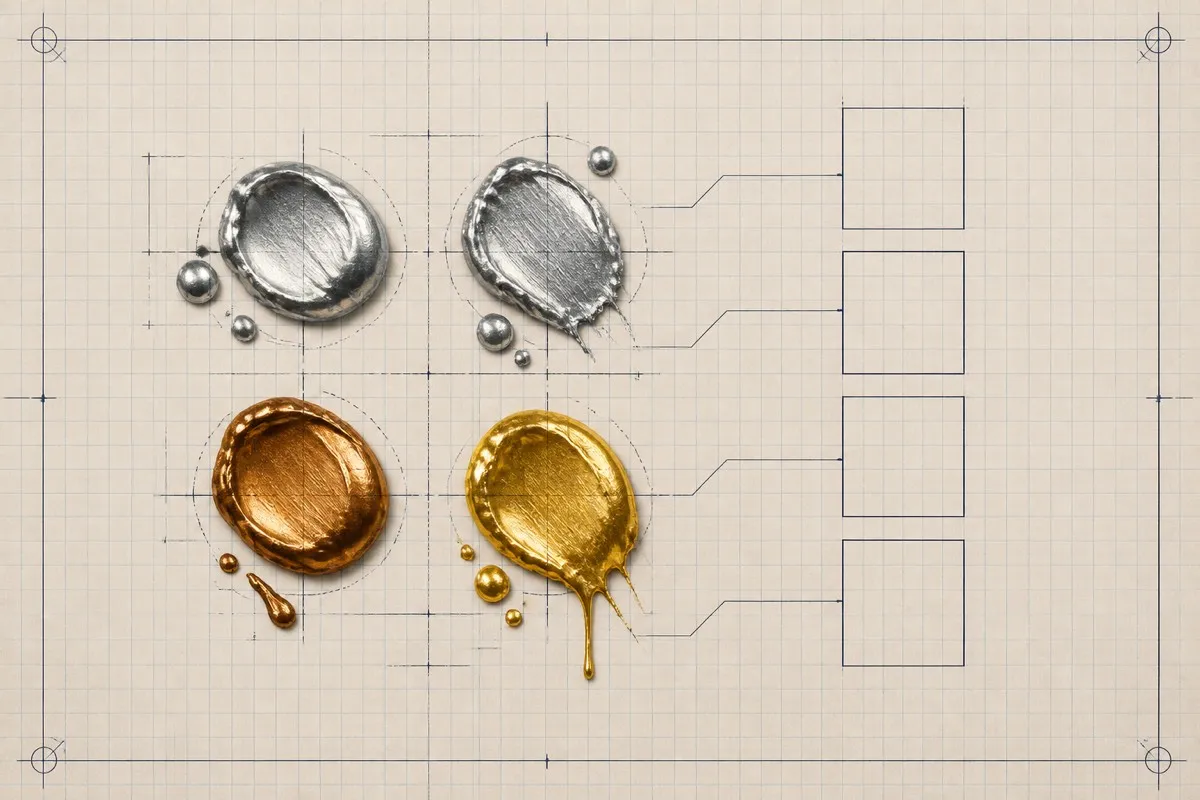
Formula P3 Metallic sits as its own range separate from the base P3 colors, and it runs eighteen shades: Blighted Gold, Boiler Black, Brass Balls, Bronze Badge, Cold Steel, Copper Penny, Copper Pipe, Deathless Metal, Galvanised Steel, Illuminated Gold, Molten Bronze, Orgoth Bronze, Pig Iron, Quick Silver, Radiant Platinum, Rhulic Gold, Solid Gold, and Spectral Steel. That is a full spread of gold, bronze, copper, silver, gunmetal, and steel tones, enough to armor an entire model line without borrowing from another brand purely to fill a gap.
Pig Iron in particular has a loyal following as a dark gunmetal base coat for weapons and armor plating, sitting darker and cooler than most Citadel steel tones. Cold Steel is the brighter counterpart, closer to a raw steel shine than a worn gunmetal.
How P3 metallics compare to Citadel and Vallejo
Quality-wise, the three brands are closer than painters often expect once you are past the first coat and into a proper layer. The differences show up more in exact tone and how much the pigment settles if the bottle sits unshaken for a while, which is a general metallic paint issue and not specific to any one brand.
Where P3 pulls ahead for some painters is coverage in fewer coats on darker undercoats, which matters if you are painting large surface areas like vehicle hulls or armor plates. Where it falls behind is simply being harder to buy. If your local shop or usual online retailer does not stock Formula P3 Metallic, that alone is often the deciding factor over a genuine quality gap.
| Use case | P3 metallic strength | Where Citadel or Vallejo covers the gap |
|---|---|---|
| Weapon and armor plating | Strong coverage, good for base coating | Citadel and Vallejo both have equivalent dark gunmetals |
| Trim and detail highlights | Good, but a smaller color spread | Vallejo Model Air metallics offer more fine gradations |
| Large surface metallics (vehicles) | Efficient in fewer coats | Airbrush-friendly Vallejo metallics if thinning heavily |
If you cannot find a specific P3 metallic
Check the P3 to Vallejo conversion chart and the P3 to Citadel conversion chart for the closest metallic match by name. Pig Iron and Cold Steel both have strong same finish matches listed there, so a stock gap does not have to stall a project. Keep the substitution to metallic for metallic. A base color, no matter how close its hue reads on screen, will not lay down the same shine.
For painters building a full metallics kit from scratch and open to any brand, a starter set is often the more efficient buy than assembling single bottles across three different ranges, since it standardizes drying time and thinning ratio across your whole rack.
FAQ
Is P3 Pig Iron a true black or a dark grey?
It reads as a very dark gunmetal, cooler and darker than most steel tones, closer to a near-black metallic than a mid-grey.
Are P3 metallics compatible with an airbrush?
Like most craft metallics, they need thinning before airbrushing and benefit from a finer nozzle to avoid pigment clumping. Check your airbrush manufacturer's thinning guidance before running any metallic through it.
Do P3 metallics need a specific primer?
A standard grey or black primer works fine under P3 metallics. Black tends to deepen the shadows in the metallic finish, grey keeps it brighter.
Is it worth switching an entire army's metallics to P3?
Only if you can reliably source the bottles. If stock is a concern, matching individual colors from the conversion charts keeps the look consistent without betting a whole project on availability.