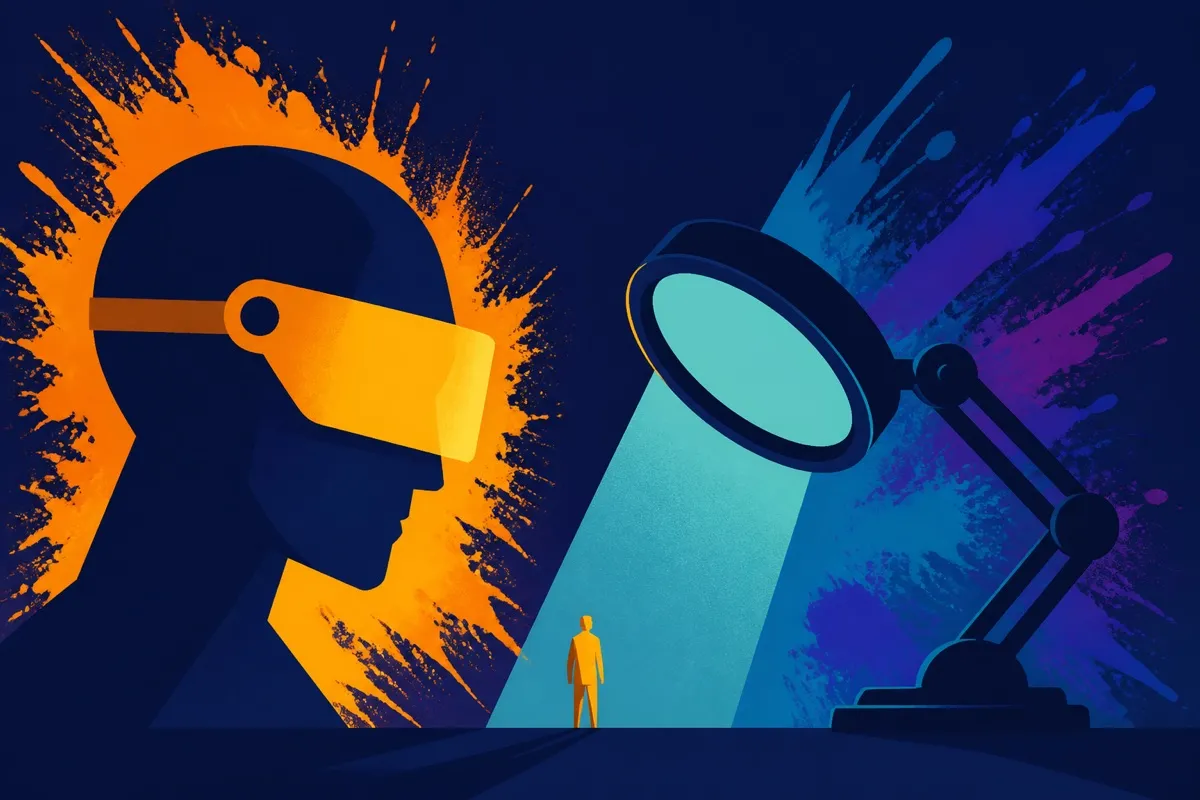
A head-mounted visor like an OptiVisor beats handheld magnifying glasses for miniature painting because it keeps both hands free for the brush and moves with your head instead of staying fixed over one spot on the desk. A handheld or lamp-mounted glass still wins for occasional use, since there is nothing to strap on and adjust before you start.
What an OptiVisor actually is
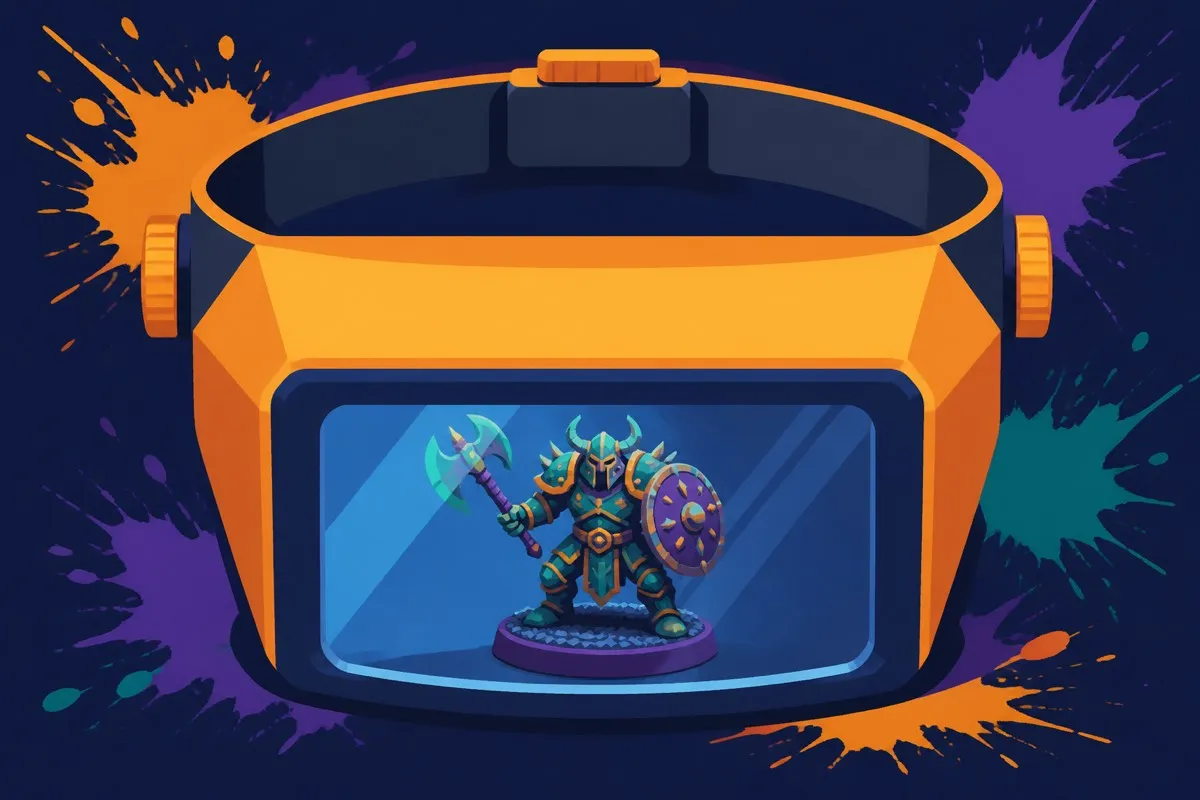
OptiVisor is the best-known brand name for a binocular head-mounted magnifier, a headband-mounted visor with swappable lenses that flips up out of the way when you do not need it. A head-mounted magnifier visor works on the same principle: hands-free magnification with interchangeable lens strength, aimed at exactly this kind of fine detail work.
Where a handheld or lamp glass still wins
Magnifying glasses, whether a handheld loupe or a lens built into a clamp lamp, need no adjustment and add no weight to your head. For painters who only need magnification occasionally, for a single tiny detail rather than a whole session, that lower friction matters more than the hands-free convenience a visor offers.
Comparing the two approaches
A head-mounted visor holds its magnification steady no matter where you turn your head, which matters for long detail sessions like faces and eyes. A clamp-mounted magnifier lamp adds a light source in the same unit, useful if your desk lighting is already weak. A handheld glass is the lightest option but ties up one hand, which is the main reason serious painters move away from it once they are doing detail work regularly.
| Option | Hands-free | Adds light | Best for |
|---|---|---|---|
| Head-mounted visor (OptiVisor style) | Yes | No | Long detail sessions, faces and eyes |
| Clamp-mounted magnifier lamp | Yes | Yes | Fixed desk setups needing more light and magnification together |
| Handheld magnifying glass | No | No | Occasional, quick checks on a single detail |
Why hobbyists reach for magnification in the first place
Close detail work, painting eyes, freehand lettering, weathering panel lines on a small scale kit, pushes past what most people can resolve clearly at arm's length, especially past a certain age or after a long session when eyes are already tired. The problem is not usually eyesight in general, it is holding sharp focus at a distance of a few inches for extended periods, which is exactly the range a magnifying visor or lamp is built for.
Getting used to a head-mounted visor
A head-mounted visor takes some adjustment. The working distance is fixed by the lens, so you learn to hold the model at that exact distance rather than moving it toward or away from your face the way you would naturally. Most painters find this becomes automatic within a few sessions. The flip-up hinge is worth using deliberately: flip the visor up when you step back to check the whole model under normal light, then flip it back down for the next pass of detail work, rather than leaving it down the entire session and losing the wider view.
Combining a visor with a lamp
Some painters use both together, a magnifier lamp for the general work area and a visor for the final push on eyes or freehand. This is not necessary for most painting, but it becomes worth considering once you are consistently doing competition-level detail work where every extra bit of clarity matters.
FAQ
What magnification is an OptiVisor?
OptiVisor-style visors come with swappable lenses at different magnification strengths, so you choose the power based on the task rather than being locked to one setting.
Can I use a magnifying visor if I already wear glasses?
Most head-mounted visors are designed to fit over regular glasses, since the lens sits further out from your eyes than reading glasses would. Check the specific model's fit before buying if you wear a larger frame.
Is a loupe the same as an OptiVisor?
No. A loupe is a small handheld or eyepiece magnifier used briefly and close to the eye, while an OptiVisor-style visor is a headband unit meant to stay on through a full painting session.
Do I need magnification at all for miniature painting?
Not always. Base coating and larger details do not usually need it. Magnification earns its place once you are doing eyes, freehand, or very small scale details where the unaided eye starts to strain.
Compare a head-mounted magnifier visor(affiliate link) against an OptiVisor-style magnifier(affiliate link) directly, or if a fixed desk light matters more than hands-free wear, see the LED magnifier lamp with clamp(affiliate link).