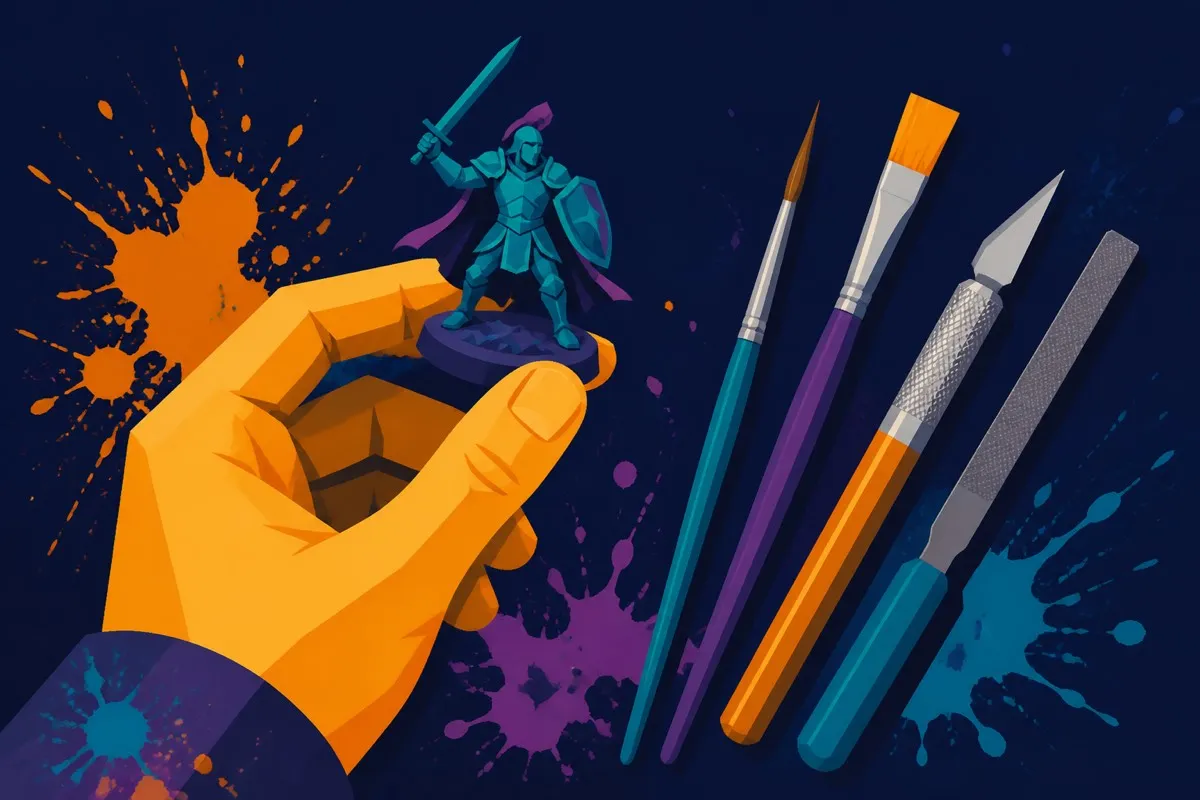
A painting handle holds the miniature while you paint, freeing your off hand to rotate the model instead of holding it directly, which keeps your painting hand steadier and keeps paint off your fingers. It sounds like a minor upgrade until you have painted an army without one and then tried one, at which point most painters do not go back.
What a painting handle actually solves
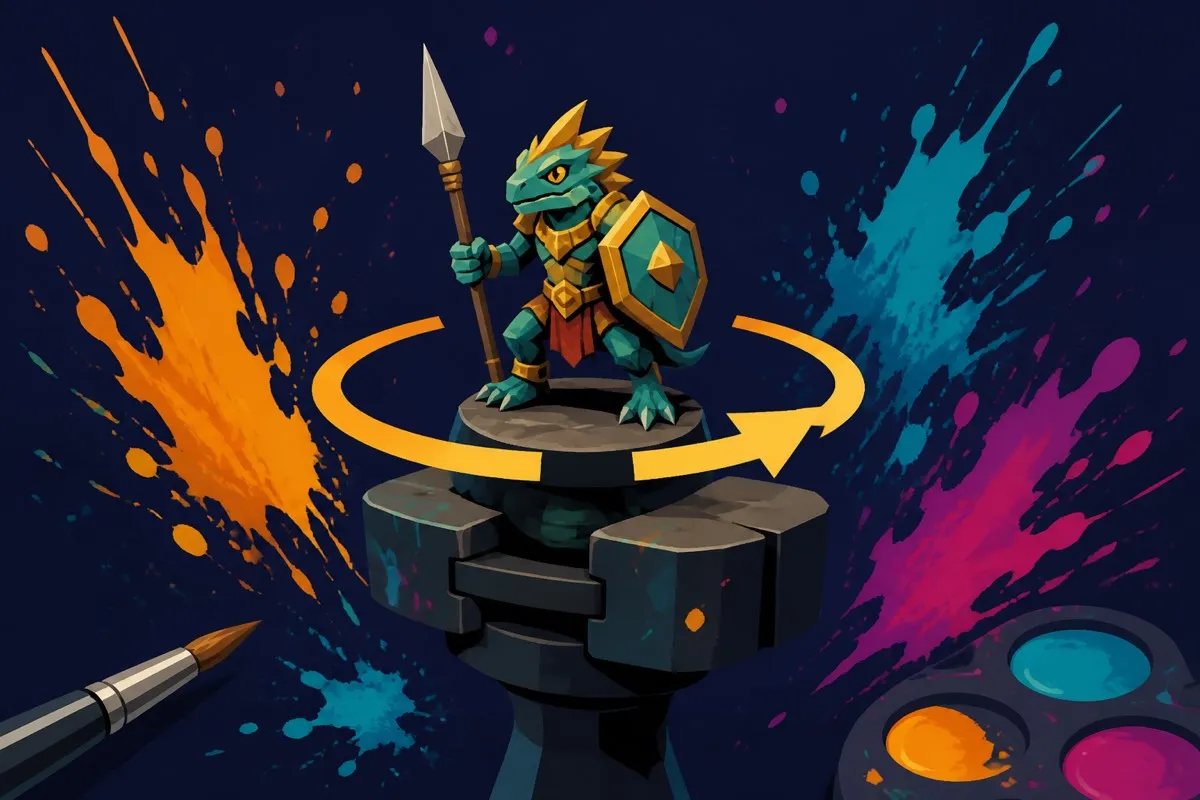
Holding a miniature directly in your off hand means your grip shifts constantly as you turn the model, which introduces small hand movements that transfer into your brush hand through your arm and shoulder. A painting handle with a spring grip(affiliate link) clamps the model's base and gives you a fixed cylindrical grip to hold and rotate instead, which isolates the model's movement from your brush hand's stability. It also keeps wet paint and primer off your fingers, which matters more than it sounds during a long airbrushing or basecoating session.
Cork-topped and magnetic handle variants exist for different base sizes, but the core benefit is the same across styles: a dedicated grip point that is not the model itself.
Prep tools that matter before paint touches the model
Two tools do more for final paint quality than most people expect, and both happen before a single drop of paint goes on.
A hobby knife with a sharp, replaceable blade is for trimming sprue nubs and cleaning up plastic before assembly. A dull blade tears plastic instead of cutting it, which leaves rough edges that show through thin paint layers. Keep spare blades on hand and swap them well before they feel truly dull.
A mold line remover, whether a dedicated scraping tool or simply the back edge of a hobby knife, removes the thin raised seam left by the injection mold. Mold lines are nearly invisible on bare grey plastic but become obvious once primer and paint go on, especially under raking light or on smooth armor panels. Running a mold line remover along every visible seam before priming is one of the highest-value five minutes in the entire painting process, because it is nearly impossible to fix cleanly after paint is already on.
Building a basic tool kit
Beyond the handle, knife, and mold line tool, a minimal hobby tool kit includes a cutting mat or spare cardboard to protect your work surface, a pair of fine clippers for sprue removal before knife cleanup, and a small file or sanding stick for larger seam lines that a knife alone will not fully smooth. None of this needs to be expensive to start. A basic set covers assembly cleanup for a long time before upgrading to specialized tools makes a visible difference.
For brush and paint-side accessories once the model is assembled and primed, see the starter supplies checklist and the brush picks guide. A wet palette is the next accessory most painters add once basic tools and brushes are sorted.
FAQ
Do I really need a painting handle, or can I just hold the model?
You can paint without one, but a handle noticeably steadies fine detail work by removing the model's own weight and shifting grip from your painting hand's stability chain.
What is a mold line and why does it matter?
A mold line is a thin raised seam left where two halves of an injection mold meet on the plastic part. It is barely visible on bare plastic but shows clearly once primed and painted, so removing it before priming matters more than removing it after.
What is the difference between a hobby knife and clippers for miniature assembly?
Clippers cut a model cleanly off its sprue with less stress on the plastic than a knife alone. A knife is for finer cleanup work afterward, like trimming small nubs and scraping mold lines.
Can I use a citadel painting handle with any brand of miniature?
Yes, painting handles clamp onto a model's base by size, not brand, so any handle sized for your base diameter works regardless of which company made the miniature.
How often should I replace a hobby knife blade?
Replace it as soon as you notice it dragging or tearing plastic instead of slicing cleanly, which is often sooner than most painters expect since a dulling blade degrades gradually.