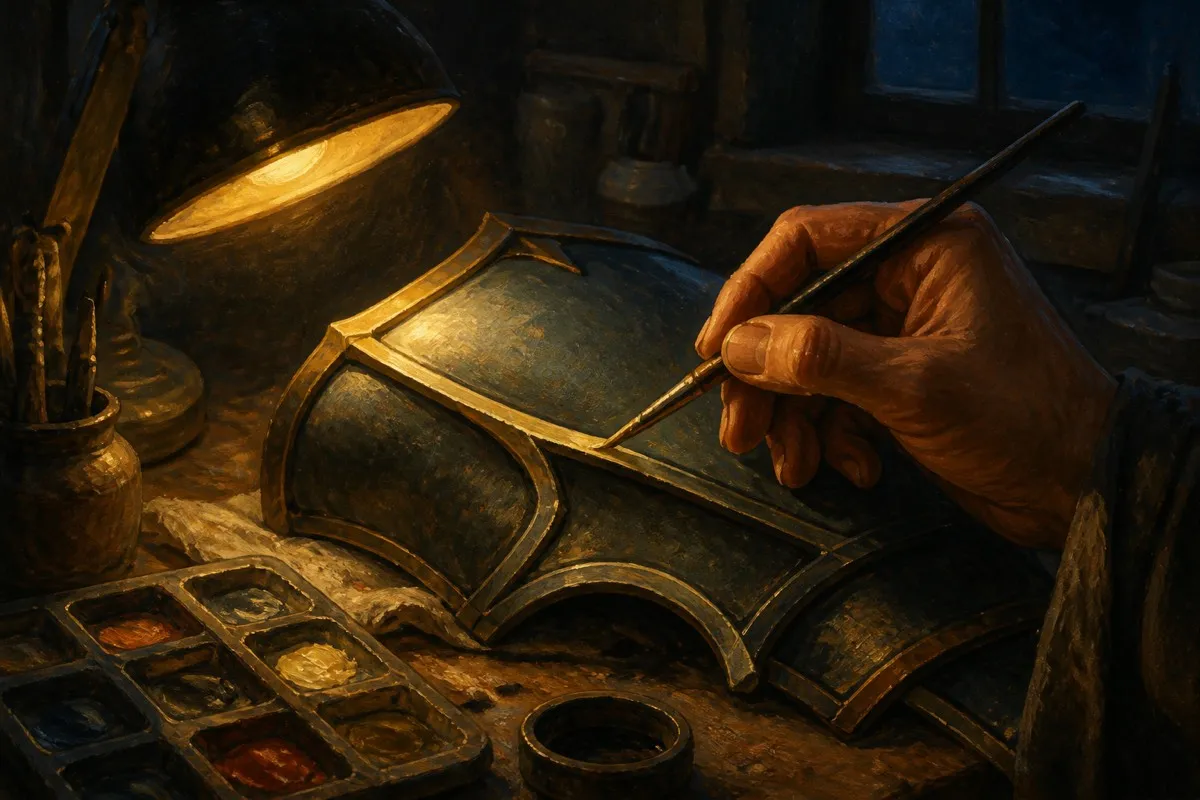
Edge highlighting a miniature means running a thin, controlled line of lighter paint along the raised edges of armor, cloth, or detail, using a fine brush loaded with barely any paint, so the highlight catches light the way a real edge would. It is a control technique more than a color technique: the paint itself is usually just a lighter version of the base color, and the entire skill is keeping the line thin, straight, and only where an edge actually is.
Why edges get highlighted at all
Light naturally catches raised edges more than flat surfaces, so a painted edge highlight is mimicking something real rather than inventing an effect. It is what separates a miniature that reads as three-dimensional from a table distance from one that reads as flat color, since most of a model's shape information at a glance comes from where light and shadow fall along its edges rather than from the middle of large flat panels.
Loading the brush correctly
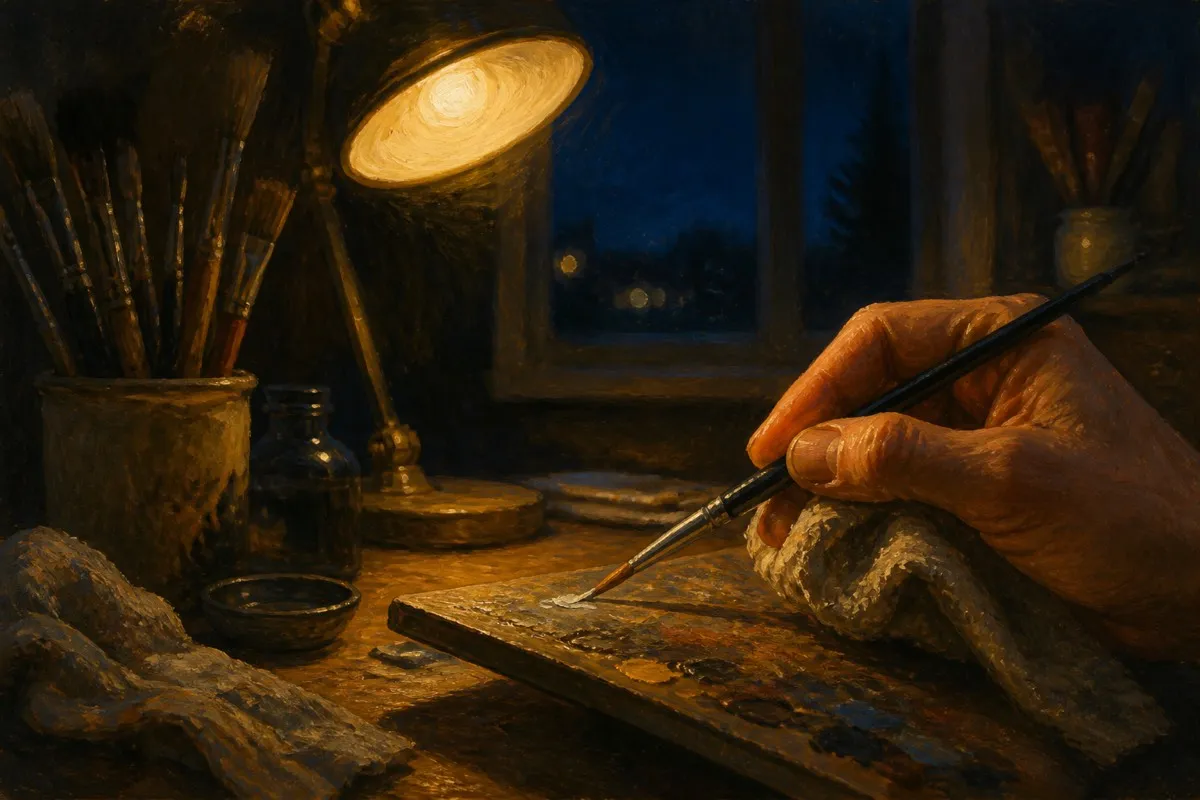
The single biggest factor in a clean edge highlight is how little paint is on the brush, not the brush itself. Load a fine detail brush with paint, then wipe most of it back off on a paper towel or the side of your palette until the brush looks almost dry. What remains in the bristles is enough to lay down a controlled line without the paint flooding off the tip the moment it touches the model. A brush that looks fully loaded is carrying too much paint for this technique.
A good detail brush with a fine point matters here more than for almost any other technique, since a splayed or blunt tip cannot hold the kind of thin, controlled line an edge highlight needs. This is one of the jobs worth protecting a quality sable for rather than reaching for a cheap synthetic. A Kolinsky sable round(affiliate link) that still holds a sharp point is the standard choice for this technique specifically.
Two ways to actually apply the line
Freehand edge highlighting drags the nearly dry brush along the edge in a single confident stroke, tip barely touching the raised surface. It takes practice to get a straight, even line this way, but it is faster once you have the control and works on curved or irregular edges that are hard to mask.
Brush control aside, a steadier hand technique some painters use is resting the miniature against a stable surface and drawing the brush toward you rather than away, since most people have finer control pulling a line inward than pushing one outward. Either way, working in short sections rather than trying to run one continuous line down a whole model's edge keeps mistakes small and easy to fix.
| Step | What to do |
|---|---|
| Load the brush | Dip in paint, then wipe almost all of it back off |
| Thin if needed | A light thin keeps the line from dragging, but too thin loses opacity |
| Test the stroke | Run a line on your palette before touching the model |
| Apply in short sections | A few centimeters at a time, not one long stroke |
| Clean mistakes immediately | Fix a smear before it dries, not after |
Fixing the common mistakes
A highlight that comes out too thick or blobby usually means too much paint was on the brush, not that the technique itself failed. Wipe the model gently with a barely damp brush before the mistake dries and try again with less paint loaded. A highlight that misses the actual edge and lands on the flat surface next to it is a brush control issue, usually fixed by resting your hand or the model against something stable rather than holding both in the air. Thinning the highlight color slightly, similar to standard layer thinning ratios, also helps it settle into a thin line instead of pooling at the first point of contact.
FAQ
What paint consistency is best for edge highlighting?
A light thin, similar to normal layer paint thinning, helps the paint flow into a thin line rather than pooling. Too thin and the color loses opacity over multiple passes; too thick and it drags and blobs.
Do I need a special brush for edge highlighting?
A fine-pointed detail brush that holds its tip well makes the biggest difference. It does not need to be expensive, but a brush that has already lost its point will fight you on every line.
Should edge highlights match the base color or use a different color entirely?
Most edge highlights use a lighter version of the base color, either a manufacturer highlight shade from the same range or a base color mixed with white. Using an unrelated color is a valid stylistic choice but reads as a deliberate design decision rather than a natural highlight.
How thin should an edge highlight line actually be?
Thinner than most beginners expect, often close to the width of the brush tip itself rather than a visible band of color. A highlight that is too wide starts to look like a second base coat rather than a highlight.