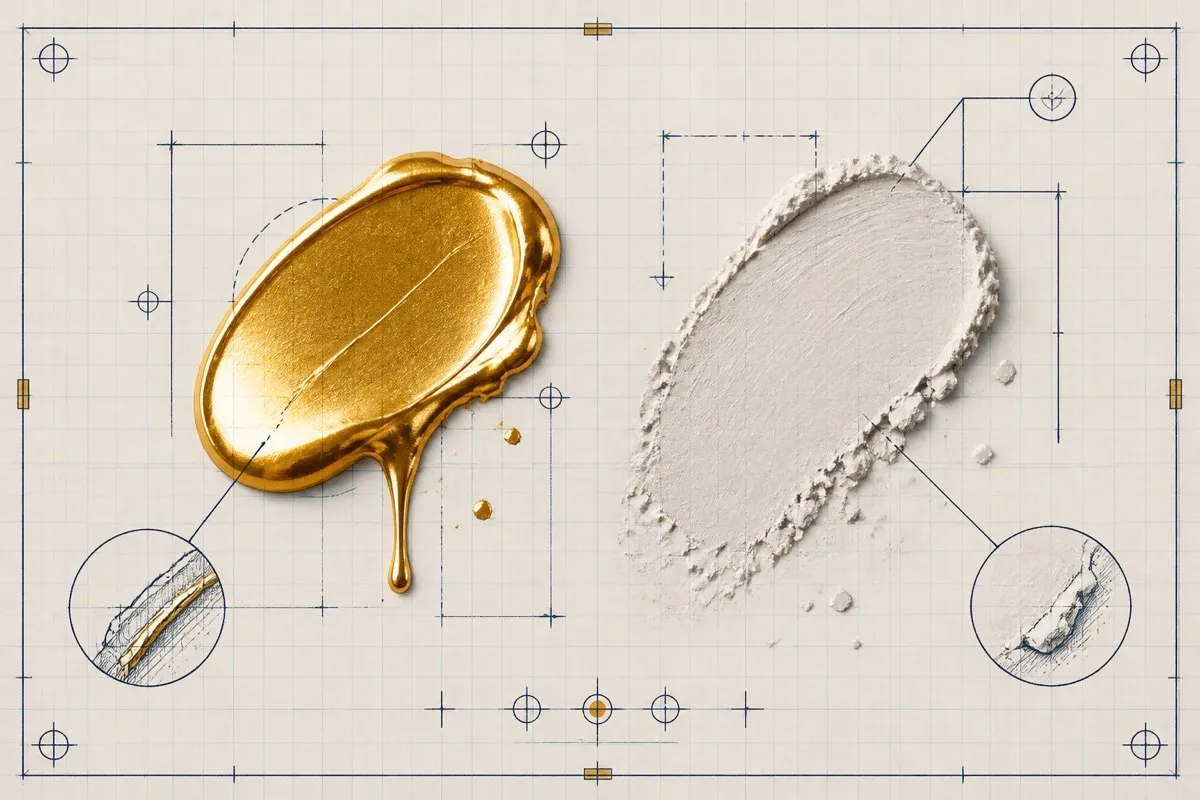
Alongside the standard Maxx Formula opaque acrylics from Green Stuff World, the brand sells metallic paints for shine and a thicker, drybrush-ready style of paint meant to go on with little to no thinning straight from the pot. These are two different tools solving two different problems: metallics give you a reflective finish for armor, weapons, and trim, while a thick dry-style paint is built to catch raised detail on a model without pooling in the recesses, the same job Citadel's Dry range or a heavily thickened craft paint does.
What metallic paints are for
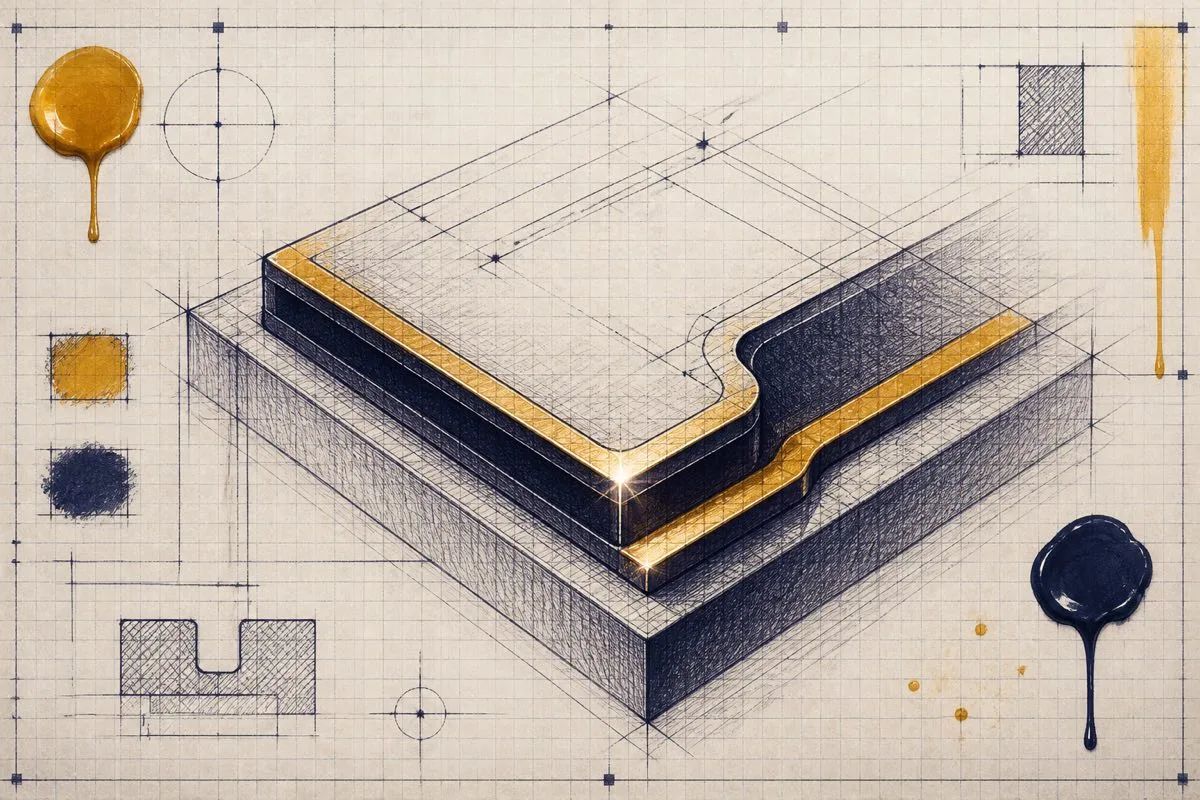
A metallic paint uses reflective flake pigment suspended in the acrylic medium, which is why metallics need more consistent stirring than flat colors, since the flake settles at the bottom of the pot faster than a standard pigment does. Applied over a dark undercoat, a metallic reads deeper and moodier. Over a lighter grey or white undercoat, the same paint reads brighter and more polished. Which one you want depends on whether you are going for worn battlefield gear or clean, freshly forged armor.
Because the standard color matching math used across this site is built for measured flat colors, and a metallic's apparent color shifts with light and viewing angle the same way the color shift range does, our catalog currently tracks Green Stuff World's opaque Maxx Formula colors rather than its dedicated metallic line. If you are trying to match a specific Green Stuff World metallic shade to another brand, the safest approach is a direct side by side comparison under consistent lighting rather than a hex based match, since the reflective quality does not reduce to a single color value the way a flat paint does.
What dry-style paint is for and how to use it
A thick, dry-style paint is formulated to grip only the raised, highest points of a model's surface texture when dragged across it with a stiff brush and almost no wet paint left on the bristles. That makes it the fastest way to add highlights to fur, chainmail, rocky bases, and rope texture without the careful edge control a thin highlight layer demands. The technique matters more than the specific product: load a flat or old brush lightly, wipe almost all of it off on a paper towel or palette, then drag the brush across raised texture in short strokes. If paint pools into a recess, you have too much on the brush. The oil washing and drybrushing guide covers the full technique in more depth if you are new to it.
| Paint style | Consistency | Best for |
|---|---|---|
| Standard opaque (Maxx Formula) | Thinned for smooth coats | Base coating any surface |
| Metallic | Similar consistency, reflective pigment | Weapons, armor plates, trim |
| Dry-style | Thick, minimal thinning | Fur, chainmail, rubble, rope texture |
Building a drybrushing kit
If you do not already own a drybrush, a stiff-bristled flat or angled brush kept separate from your detail brushes is worth the small investment, since dragging thick paint across texture wears bristles down fast and you do not want that happening to your good detail brush. A dedicated drybrush set(affiliate link) built for the technique holds up better over repeated use than a standard round brush pressed into service.
FAQ
Do Green Stuff World metallics need thinning?
Light thinning helps flow and coverage, but do not thin so much that the reflective flake becomes sparse and patchy. Stir the pot thoroughly before each use since metallic flake settles quickly.
What is the difference between drybrushing and normal highlighting?
Drybrushing catches only raised texture in broad, fast strokes with almost no wet paint on the brush. Normal highlighting is a controlled, thinned line painted along a specific edge with a wet brush.
Can I use a standard Maxx Formula color for drybrushing?
You can thicken any acrylic slightly by letting a small amount dry partially on the palette, but a paint formulated specifically for drybrushing will hold up better over repeated use and grip texture more predictably.
Do metallic paints need a different primer than standard colors?
The same primer works under both. A darker primer under a metallic tends to deepen the finish, a lighter primer brightens it, the same relationship as with any metallic paint.