
Glazing a miniature means applying very thin, transparent layers of color over an already painted area to shift its hue or deepen its tone gradually, rather than covering it outright the way a normal coat does. Each glaze layer is thin enough that the layer underneath still shows through, so you build the effect with several passes instead of one, and the result is a smooth gradient with none of the hard edges that come from layering opaque paint.
What makes a glaze different from a normal thin coat?
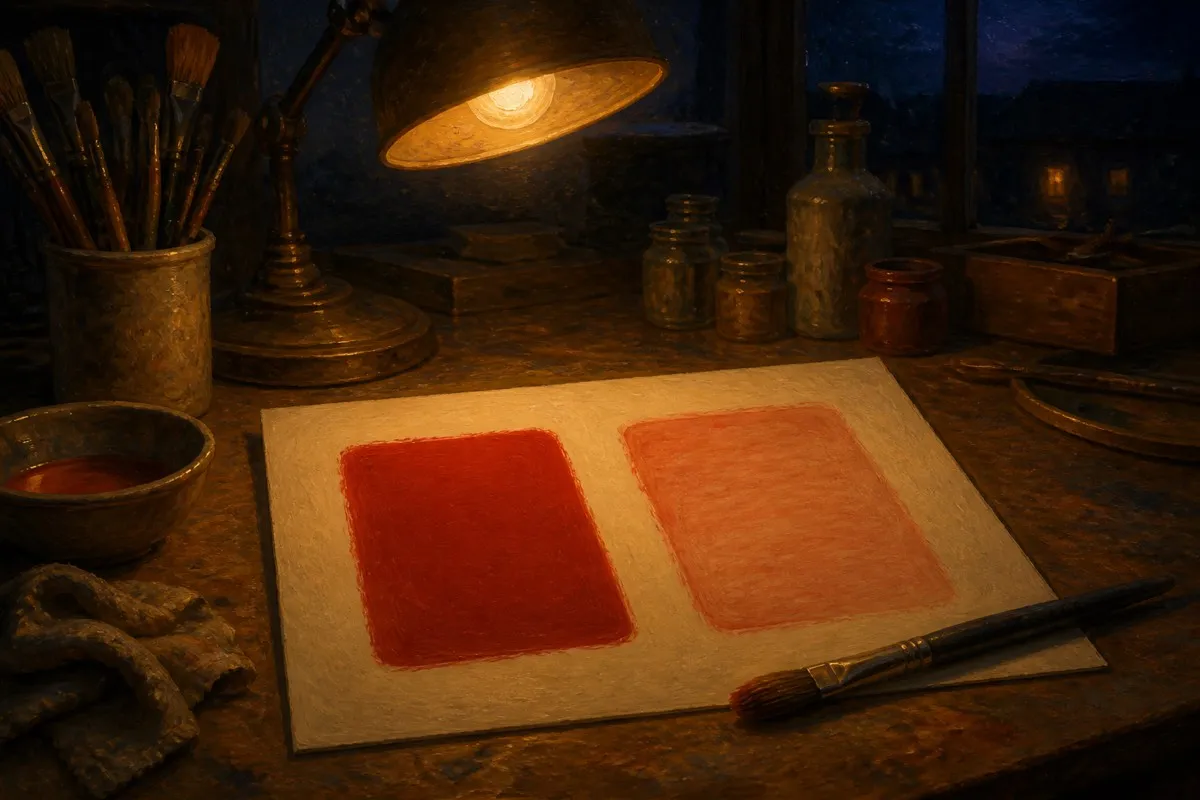
A regular thinned basecoat is still meant to eventually reach full opacity once you have applied enough coats. A glaze is meant to stay translucent forever. You are not thinning paint to make application easier, you are thinning it specifically so that some of the color underneath keeps showing through the final result. This is why glazing uses a much higher ratio of medium or water to paint than normal thinning, often nine or more parts medium to one part paint, compared to the roughly fifty-fifty ratio you would use for a basecoat you intend to build to full coverage.
How do you mix a glaze?
The simplest glaze is just paint and water in a heavy ratio, but water-only glazes dry fast and can reactivate the paint underneath if you go over the same spot twice before it cures. A dedicated glaze medium solves both problems: it slows drying time so you have longer to work the paint into a smooth transition, and it binds better to the layer underneath without lifting it. Citadel's Lahmian Medium is the most common choice for painters already using Citadel paints, and it works with any acrylic paint, not just Citadel's own range. AK Interactive's Glaze Medium does the same job for painters working primarily in that range. Some brands also sell ready-mixed glaze colors, such as Two Thin Coats' Red Glaze, which skip the mixing step entirely at the cost of being locked into a fixed color rather than whatever shade you want.
What is glazing actually used for?
| Goal | How glazing helps | Typical layers |
|---|---|---|
| Smoothing harsh highlight transitions | Softens the line between a highlight and the base color underneath | 2 to 4 thin passes |
| Shifting an overall hue | A colored glaze over a full model nudges its temperature without repainting | 1 to 3 passes |
| Deepening recesses without a wash | A dark glaze pools less than a wash and gives more control | 2 to 3 passes |
| Adding subtle color variation to skin or cloth | Small glazes of red, blue, or yellow build believable variation | 1 to 2 passes per zone |
What is the biggest mistake painters make with glazing?
Applying the glaze too thick, which is easy to do by accident because a glaze that looks thin in the pot can still go on heavier than intended if you load too much on the brush. A glaze that is not thin enough behaves like a normal coat and covers the layer underneath instead of blending with it, which defeats the entire point of the technique. The fix is to load the brush, then wipe most of the paint off on a paper towel before it ever touches the model, so what actually reaches the miniature is closer to tinted water than paint.
Does glazing work the same across brands?
Mostly, but paint chemistry differs enough between brands that a glaze mixed at the same ratio can behave differently depending on what you started with. Citadel and Vallejo paints thin predictably with water or a glaze medium and hold their pigment well even at high dilution. Some metallics and technical paints do not glaze cleanly at all because their pigment particles are too large to stay suspended at extreme dilution, so check whether the base paint you are glazing over is a standard acrylic before assuming the technique will work. If you switch a scheme between brands partway through a project, our Citadel to Vallejo conversion guide covers how the finish types line up, which matters for knowing whether a paint you are about to glaze over will behave like the one you are used to.
How many layers should a glaze take?
Plan on two to four thin passes for most effects, letting each one dry fully before adding the next. Trying to build the whole effect in one heavier pass almost always looks patchy, because the glaze pools slightly differently each time it is applied and needs multiple thin passes to average out into a smooth gradient. Patience here matters more than skill; a slow, thin, repeated glaze will out-perform a fast, thick, single pass every time. A sealed wet palette(affiliate link) helps here too, since a thin glaze mix dries out fast on an open palette and a hydrated surface keeps it workable between passes.
FAQ
Can I glaze over metallics? Sometimes, but results vary. Fine metallic particles in some paints do not stay suspended at glaze-level dilution, so test on a spare model first before committing to a full miniature.
Do I need a glaze medium or can I just use water? Water works for a quick glaze, but a dedicated medium gives you more working time and better adhesion, which matters most on larger models with more surface to cover before the glaze starts drying.
How is glazing different from a wash? A wash flows into recesses and pools by design, using surface tension to shade automatically. A glaze is applied evenly across a chosen area and does not rely on pooling, giving you more direct control over exactly where the color goes.
Why does my glaze look streaky instead of smooth? Streaking usually means the brush was too dry or the glaze too thick. Reload with a properly thinned mix and use smooth, overlapping strokes rather than dabbing.
Can beginners use glazing or is it an advanced technique? Beginners can absolutely use it, especially for something simple like a single hue-shifting pass over a finished model. The subtler blending effects take more practice, but the basic technique is approachable from the start.