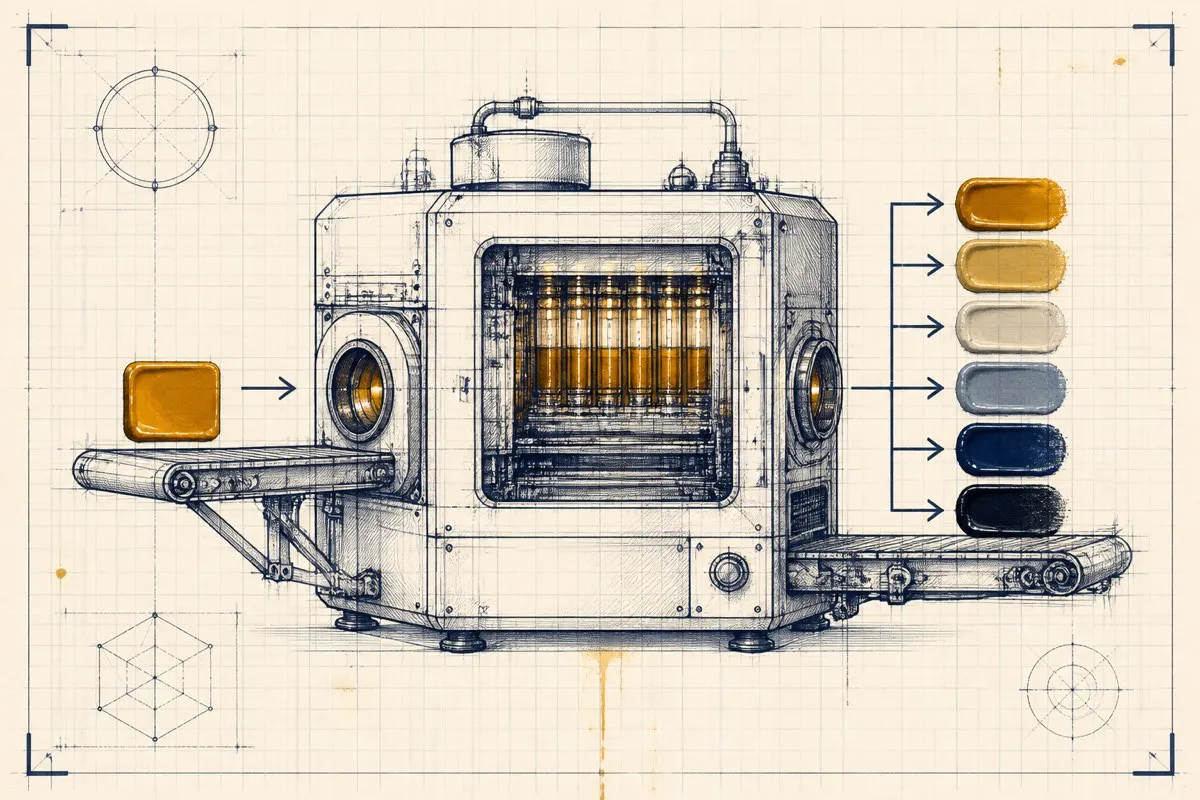
Paint matching tools can calculate color distance between two stored swatches, but they cannot measure finish, coverage, or how paint behaves once thinned on a model. That split is the honest answer to whether these tools help. Use the score to narrow the candidates, then verify the finish and test the actual paint before buying a bottle based on a percentage.
What a matcher is actually calculating
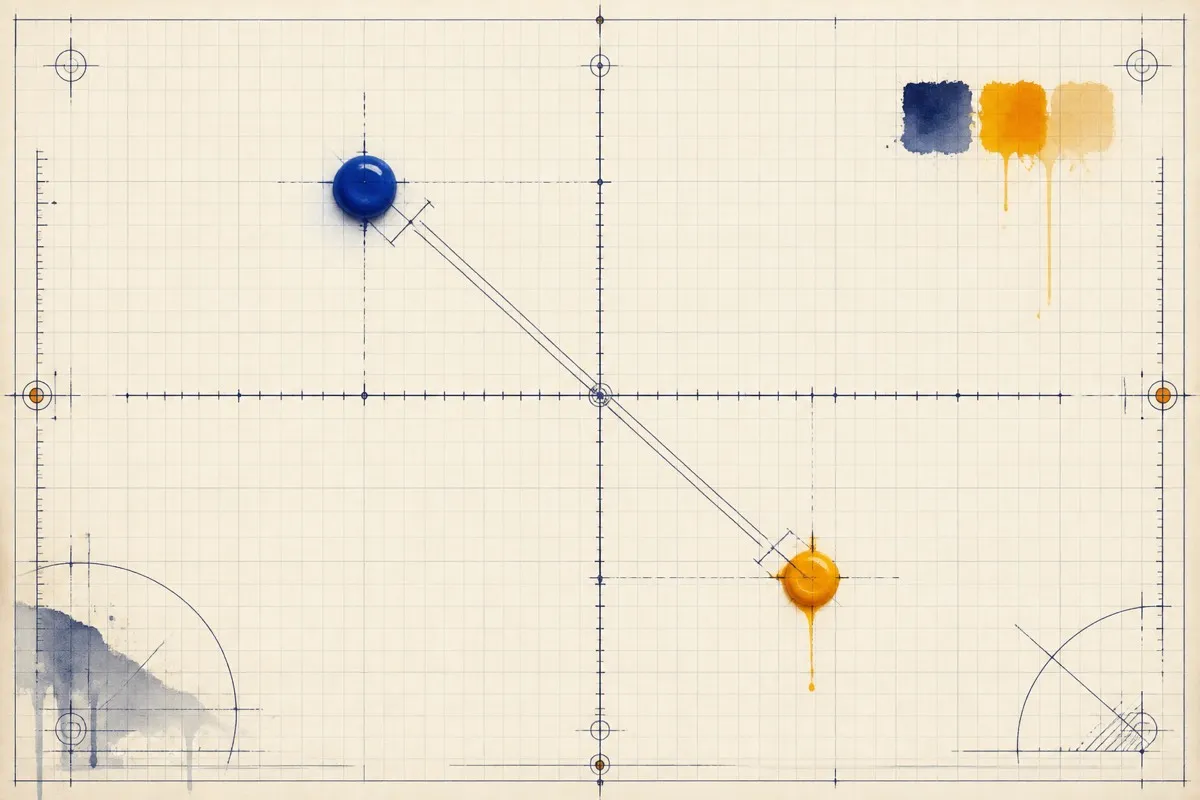
A paint matcher takes two recorded digital colors and calculates their distance with a formula designed around human color perception. Basecoat Lab applies CIEDE2000 to approximate stored swatches, then converts the result to its display percentage. The calculation is repeatable, but it is not a physical paint measurement and cannot promise that two paints will look the same side by side under your primer, application, finish, and lighting.
Where it gets fuzzy is the input. If the recorded color for a paint was read from a bottle cap, a swatch card, or a mixed batch of user submissions rather than a controlled sample, the output number inherits that noise. A tool that shows its method, hex distance versus community consensus, and lets you see the delta rather than just a headline percentage is doing the honest version of this. One that just says "98% match" with no source is asking you to trust a black box.
What no matcher can see
Color distance cannot tell you if a paint is a metallic, a wash, or a one-coat contrast style formula, because those properties live in how the paint physically behaves, not in its recorded hex value. A transparent brown wash and an opaque brown base coat can score close on color and still be completely different products to use. This is why a good matcher groups results by finish type before ranking them by color, and flags any match that crosses finish classes instead of presenting it as a clean swap. The Citadel to Vallejo conversion guide walks through exactly how those finish classes get handled here.
Coverage, thickness straight from the pot, and how a paint thins in a wet palette also sit outside what a digital color score can tell you. Two paints can have close stored swatches and still require different amounts of thinning to lay down the same way.
| What the tool compares or displays | What it does not measure |
|---|---|
| Color distance between two swatches | Opacity and coverage per coat |
| Finish class (base, layer, wash, metallic) | Thinning behavior in a wet palette |
| Whether a match crosses finish types | Drying sheen and time |
| A ranked list of closest options | Whether you will personally like the result |
How to use a match percentage without getting burned
Use higher scores to shortlist same-finish candidates rather than treating a score band as an automatic swap. As the score falls, the stored digital colors are farther apart under the formula, but no score alone predicts the dried physical result. The converter shows the percentage and finish class together for exactly this reason, and the Citadel vs Vallejo comparison covers differences a single color number cannot capture. Test the actual paint when matching an existing army.
A cautious way to use any matcher, ours or a printed community chart, is to check the percentage, confirm the finish class matches what you need, then test the actual paint before you buy for a sensitive match.
FAQ
Are online paint matching tools accurate?
An online matcher can apply a repeatable calculation to its stored digital references when it discloses its formula and data. That does not establish physical paint accuracy. Finish, coverage, and handling are not captured by color data alone, so treat any result as a candidate to verify rather than a guarantee.
Why did a 90 percent match look wrong once I painted it?
Possible causes include a finish mismatch, a wash paired with an opaque base, lighting, primer, and errors in the approximate source swatches. Judge any match after it has fully dried under normal light and against your actual primer, not against wet paint or the tool's on-screen swatch.
Is a hex based match better than a community chart?
They answer slightly different questions. A hex-based calculation ranks the approximate stored swatches by digital color distance. A community chart may reflect painters matching by role in a scheme. Either can suggest candidates, but neither proves the physical result.
Can a paint matcher replace testing a color on a model?
No. It narrows a full paint range down to a short list worth testing, which is the actual time savings. The final call still belongs to a test swatch on the model itself.