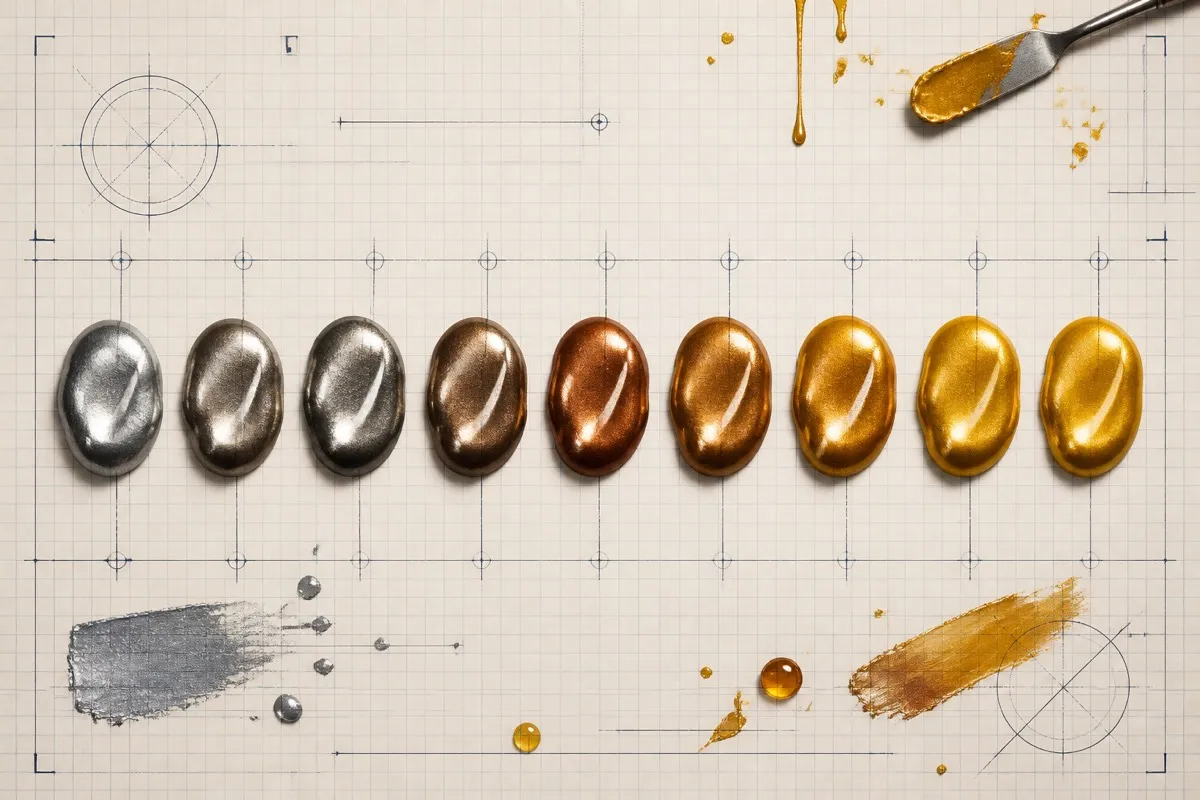
Leadbelcher is the dark gunmetal at one end of the Citadel metallic range, and the golds like Retributor Armour and Balthasar Gold sit at the other end, with a full run of steels, bronzes, and coppers filling the space between. Citadel's metallic paints split across the Base line, for heavy coverage in one or two coats, and the Layer line, for brighter highlight metallics glazed over a base coat. Knowing which bracket a color sits in matters more than knowing its exact shade, because a Base metallic and a Layer metallic behave differently on the brush even when they read as similar colors in the pot.
The steels and silvers
This is the coolest, greyest end of the range, and it is where most weapons, armor plating, and mechanical detail work starts.
- Leadbelcher is the standard dark gunmetal base coat, the default first coat for guns, blades, and any large metal surface before highlighting.
- Ironbreaker is a brighter, cleaner steel used as a highlight over Leadbelcher or as a base coat on its own for lighter metal armor.
- Runefang Steel pushes brighter and slightly warmer, a common edge highlight over Ironbreaker.
- Stormhost Silver is the brightest of the group, closer to a true polished silver, and works well as a final sharp edge highlight rather than a base coat.
- Iron Hands Steel and Grey Knights Steel both sit as darker, more neutral base metallics, useful when you want armor plating that reads metallic without drawing the eye the way a bright silver does.
The bronzes and coppers
Warmer and darker than the steels, this bracket covers everything from ancient bronze to weathered copper piping.
- Warplock Bronze is the deep, near-black bronze base coat, a common starting point for aged or corroded metal.
- Castellax Bronze and Brass Scorpion both read closer to a true dark bronze, good mid-tone options between Warplock Bronze and a bright highlight.
- Hashut Copper and Fulgurite Copper lean redder, closer to raw copper than bronze, and pair well together as a base and highlight combination.
- Sycorax Bronze and Screaming Bell round out the darker, more muted end for weathered or ancient metalwork.
The golds
The warmest bracket, used for trim, jewelry, and the ornate detailing that Citadel's own factions lean on heavily.
- Retributor Armour is the workhorse gold base coat, bright and opaque enough to cover in one coat over a dark undercoat.
- Auric Armour Gold and Liberator Gold sit as mid-tone golds, often used as the main coat with Retributor Armour reserved for highlights.
- Gehenna's Gold reads deeper and more amber, useful for a warmer, less polished gold finish.
- Balthasar Gold is technically a glaze rather than a flat metallic, brushed thinly over a gold base coat to add depth into recesses without flattening the shine.
- Runelord Brass sits at the darkest, most desaturated end, closer to tarnished brass than a bright gold.
Skullcrusher Brass and Canoptek Alloy do not fit neatly into steel, bronze, or gold. Skullcrusher Brass is a bright warm brass highlight, and Canoptek Alloy is a cooler grey-brown alloy tone built for the Necron range, closer to a dull pewter than any of the categories above.
Silver to gold at a glance
| Family | Base line colors | Layer line colors | Typical use |
|---|---|---|---|
| Steels and silvers | Leadbelcher, Iron Hands Steel, Grey Knights Steel | Ironbreaker, Runefang Steel, Stormhost Silver | Weapons, blades, armor plating |
| Bronzes and coppers | Warplock Bronze, Screaming Bell | Castellax Bronze, Brass Scorpion, Hashut Copper, Fulgurite Copper, Sycorax Bronze | Ancient or weathered metalwork |
| Golds | Retributor Armour | Auric Armour Gold, Liberator Gold, Gehenna's Gold, Runelord Brass | Trim, jewelry, ornate detail |
| Glaze | None | Balthasar Gold | Deepening recesses over a gold base |
Why hex color alone will not tell you which one to buy
A flat color swatch cannot show shine, flake size, or how a metallic settles into recesses, which is exactly why comparing two metallics by color distance alone is unreliable. Two bronzes can measure close in raw color and still look completely different once light hits the metal flake at an angle. If you are converting a Citadel metallic into another brand, treat the conversion chart as a starting point for hue and value, then check the actual bottle or a painted swatch before committing an army's worth of models to the swap. The Citadel vs Vallejo comparison covers how the two brands differ in metallic flake and coverage more broadly.
Building a working metallic set
Most painters do not need all twenty-plus Citadel metallics on the shelf. A steel, a bronze, and a gold from the Base line covers standard tabletop work, with one or two Layer metallics added once you want more contrast. The Citadel Base, Layer and Shade Brush Trio(affiliate link) suits this layered metallic work, and a wall-mounted rack sized for Citadel bottles(affiliate link) keeps a growing collection organized. For the whole Citadel range, see the Citadel range guide.
FAQ
What is Runelord Brass used for?
Runelord Brass is the darkest, most desaturated brass in the Citadel Base line, typically used as a base coat for tarnished or ancient brass fittings before a brighter brass highlight.
Is Balthasar Gold a base coat or a wash?
Neither exactly. It is a glaze, applied thinly over a gold base coat to deepen recesses and add richness without fully covering the layer underneath.
What is the difference between Warplock Bronze and Stormhost Silver?
They sit at opposite ends of the range. Warplock Bronze is a very dark, near-black bronze base coat, while Stormhost Silver is the brightest, coolest silver in the Layer line, usually reserved for sharp final highlights.
What is Canoptek Alloy for?
Canoptek Alloy is a cool grey-brown metallic built for the Necron range, closer to a dull pewter than a true steel or bronze, and it is a common base metallic for Necron chassis plating.
Do Iron Hands Steel and Grey Knights Steel look the same?
They are close but not identical. Both are darker, more neutral steels suited to base coats rather than highlights, and painters often pick between them based on whether they want a slightly warmer or cooler grey undertone.