
Citadel's green and blue lineup runs deep enough that picking useful shades by name saves time over scrolling the full range. These five come up often because each covers a distinct role: a highlight green, a glow effect, a clean midtone blue, a deep navy, and a flexible base green.
1. Sons of Horus Green
A dark, desaturated olive-green Layer paint named for the Horus Heresy faction, useful anywhere a scheme wants green that reads as muted and worn rather than bright or heroic. It layers well over a darker green base for weathered armor or camouflage schemes, and it thins cleanly enough for a glaze pass if you want to shift a base color toward olive without repainting it outright.
2. Warpstone Glow
A bright, saturated green built for glow and energy effects, not general armor coverage. It is the standard pick for magical or radioactive green light sources, plasma coils, or anything meant to look like it is emitting its own color rather than reflecting ambient light. A thin edge highlight of Warpstone Glow around a light source, rather than a flat coat, is usually what sells the effect.
3. Baharroth Blue
A clean, mid-bright blue Layer paint that highlights well over a darker blue base without shifting toward purple or teal. It is a common choice for Eldar and Aeldari schemes as well as any faction wanting a crisp, saturated blue accent, and it holds its hue reasonably well even when thinned for smooth blending transitions.
4. Thunderhawk Blue
A deep navy Layer paint, darker and more restrained than Baharroth Blue, useful for shadow tones on blue armor or as a standalone deep blue for void and naval schemes that want more color depth than straight black. It also works as a recess-adjacent shade color, painted into the deepest folds before a lighter blue is built up over the raised areas.
5. Stegadon Scale Green
A muted, slightly desaturated green Base paint that covers well over primer and works equally for reptilian skin, jade-toned armor, or camouflage. Its neutral tone makes it easier to highlight in multiple directions than a more saturated green, toward yellow-green for a sicklier look or toward blue-green for something cooler, without the base color fighting either direction.
How do you pick between similar greens or blues?
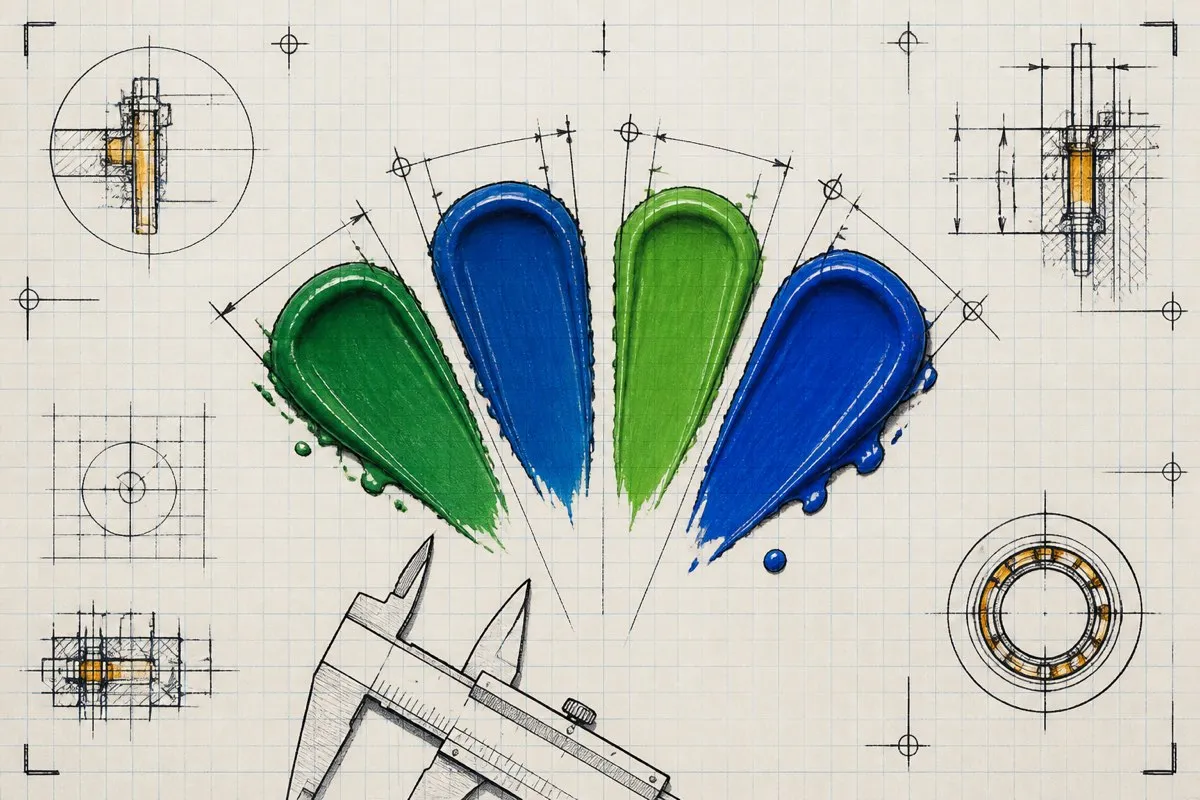
Start with what the color needs to do: a base coat wants strong coverage and a neutral starting tone, a highlight wants to be a clear step lighter than what it sits over, and a glow or energy effect wants saturation over subtlety. Sons of Horus Green and Stegadon Scale Green both work as flexible starting tones, where Warpstone Glow is a specialist color you would not use for general armor. If you are building a scheme from scratch, pick the base or layer tone first and treat the glow or accent color as the last decision, since it only needs to work against whatever base you already chose.
For the complete current lineup with swatches, see the Citadel Layer range page and the Citadel Base range page. Run any of these five through the converter to check the closest match in Vallejo or Army Painter if you are cross-shopping brands. A base, layer, and shade brush trio(affiliate link) sized for this kind of layering keeps thin highlight coats controllable instead of loading too much paint at once.
FAQ
Is Sons of Horus Green only usable for Horus Heresy armies?
No, the name comes from the faction it was released alongside, but the color itself works for any scheme wanting a muted olive-green tone.
What's the difference between Warpstone Glow and a regular green highlight?
Warpstone Glow is more saturated and intended to look like a light source, where a standard highlight green is meant to look like reflected ambient light on armor or cloth.
Can Baharroth Blue and Thunderhawk Blue be used together on the same model?
Yes, they pair naturally as a highlight and shadow pairing for the same blue scheme, with Thunderhawk Blue in recesses and Baharroth Blue on raised edges.
Is Stegadon Scale Green a Base or Layer paint?
It is a Citadel Base paint, meaning it is formulated to cover primer directly in one or two coats rather than being built up as a highlight layer.
Do these colors have close equivalents in other brands?
Most do. Use the converter to check color-distance matches in Vallejo, Army Painter, or another brand before substituting, since finish type can differ even at a close color match.