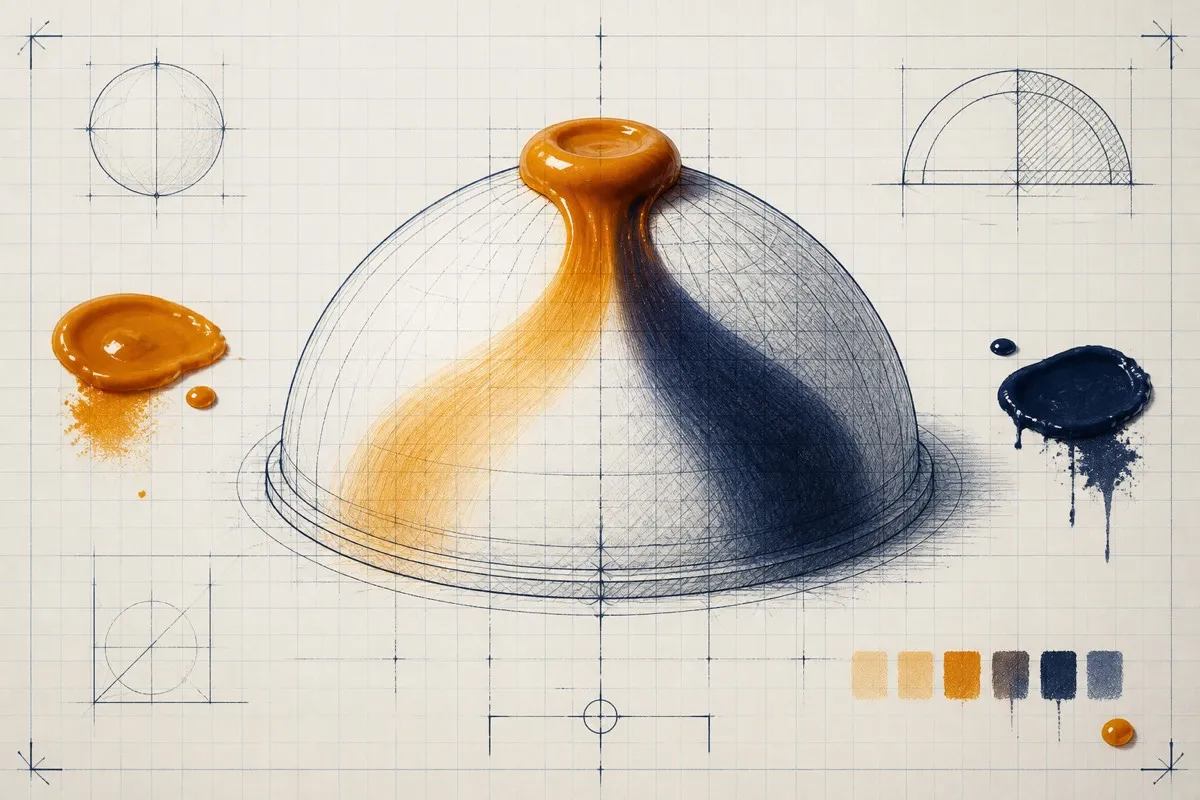
Citadel Contrast paint is a one-coat paint that combines a base color and a shading wash into a single formula. Applied over a white or light grey undercoat, it flows into recesses and pools there just like a wash, while leaving a lighter, more even tint across raised surfaces, so a single brush pass can produce a base coat and a shaded result at the same time.
That is the entire pitch of the range: speed. A traditional scheme needs a base coat, then a wash, then highlights. Contrast paint is built to compress the first two steps into one, which is why it became popular with painters who want an army table-ready fast rather than showcase-finished slow.
What is contrast paint actually made of?
It uses a different medium than standard Citadel Base or Layer paints: a more fluid, ink-like carrier that lets pigment settle unevenly on purpose, thin over flat surfaces and concentrated in the recesses. That is also why contrast paint behaves badly over a colored undercoat other than white or grey; the formula is tuned around how it interacts with a pale, matte surface underneath it.
How do I use Citadel Contrast paint for the first time?
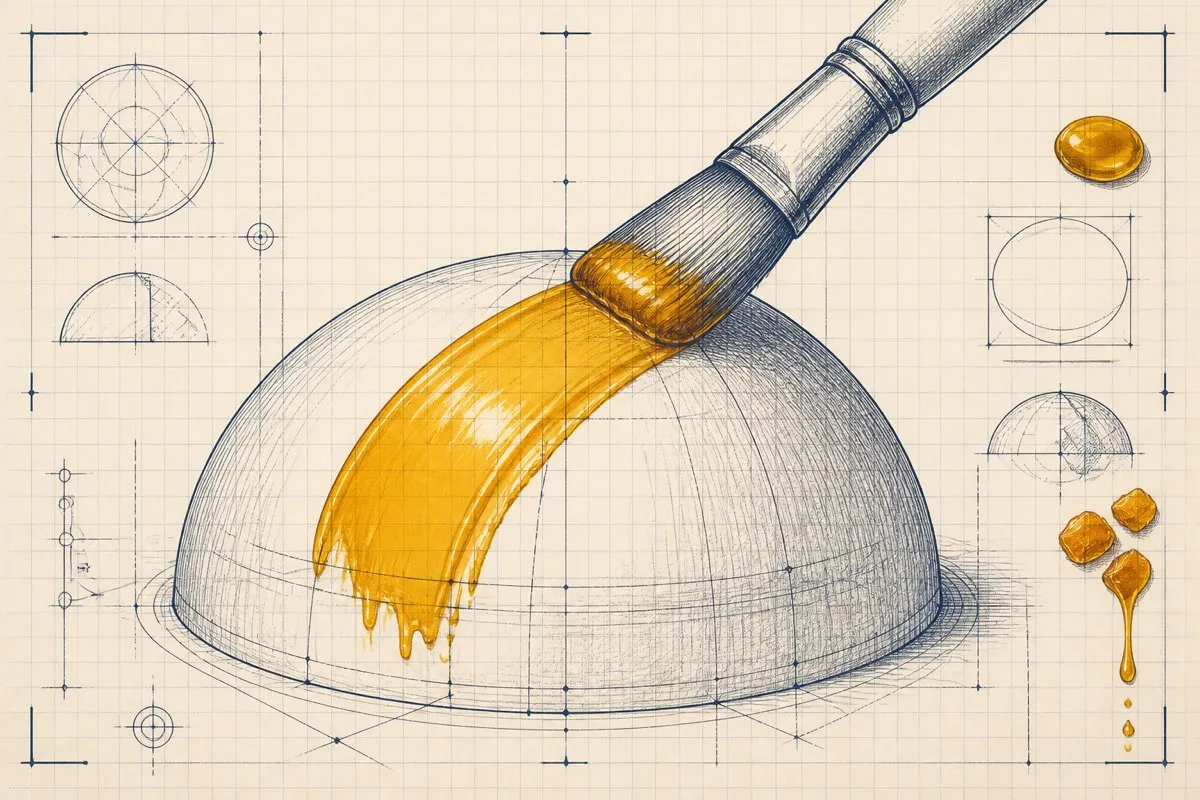
Prime the model white or a very light grey. A colored primer will skew every contrast color, since the paint is semi-translucent by design and the undercoat shows through. Apply a single, even coat with a decent-sized brush, moving with the model's contours rather than scrubbing. Let it dry fully before touching it again; contrast paint reactivates easily if you go back over a still-damp area, which drags pigment out of the recesses and ruins the pooling effect.
What is Citadel Contrast Medium for?
It is a clear extender sold alongside the range, used to thin a contrast color without diluting its pigment the way water would. It also lets you layer a second, lighter application of the same contrast color for a more controlled build up, or mix two contrast colors together while keeping the pooling behavior intact.
Is Baal Red a good example of a contrast color?
Yes. Baal Red is a bright, saturated contrast red commonly used for banners, robes, and red armor, and it demonstrates the range's core trick well: it goes on translucent over white and reads as a rich, shaded red without a separate wash step.
What mistakes do beginners make with contrast paint?
The most common one is treating it like a normal paint and going back over an area a second time before it has fully dried. Contrast paint stays reactivatable longer than a standard acrylic while it dries, so a second brushstroke over a still-tacky patch drags pigment sideways out of the recesses instead of adding coverage, leaving streaks and thin patches. The second common mistake is loading too much paint on the brush. A heavily loaded brush overwhelms the thin, controlled flow the formula depends on and floods the recesses instead of letting the paint settle there naturally. A lightly loaded brush and a single confident pass produce a far more even result than several careful, hesitant ones.
What is the catch with contrast paint?
It is not a full replacement for traditional layering if you want a showcase finish. The result is flatter and less controlled than hand-blended highlights, and it can look inconsistent on large flat surfaces like capes or shields where the pooling effect has nowhere obvious to go. Most painters treat it as a fast base layer they can add traditional highlights on top of, not a finished technique on its own.
FAQ
What is contrast paint used for?
Getting a base color and a shaded, recessed result from a single coat, primarily for speed painting tabletop-ready armies rather than showcase models.
Do I need a white undercoat for contrast paint to work?
Yes, or a very light grey. The paint is translucent by design and relies on a pale surface underneath to read correctly; a dark or colored undercoat will muddy or completely change the result.
Can contrast paint be used over a normal base coat?
It is not designed for that. It works as intended over primer, and using it over an already opaque base color removes the translucency effect the range depends on.
How is contrast paint different from a Citadel Shade wash?
A Shade is applied after a base coat to add depth in the recesses only. Contrast paint replaces both the base coat and the shading step in a single application over primer.
What is a good starter set for trying Citadel Contrast?
A Citadel Contrast starter set(affiliate link) is a reasonable way to try several colors before committing to the full range one bottle at a time.