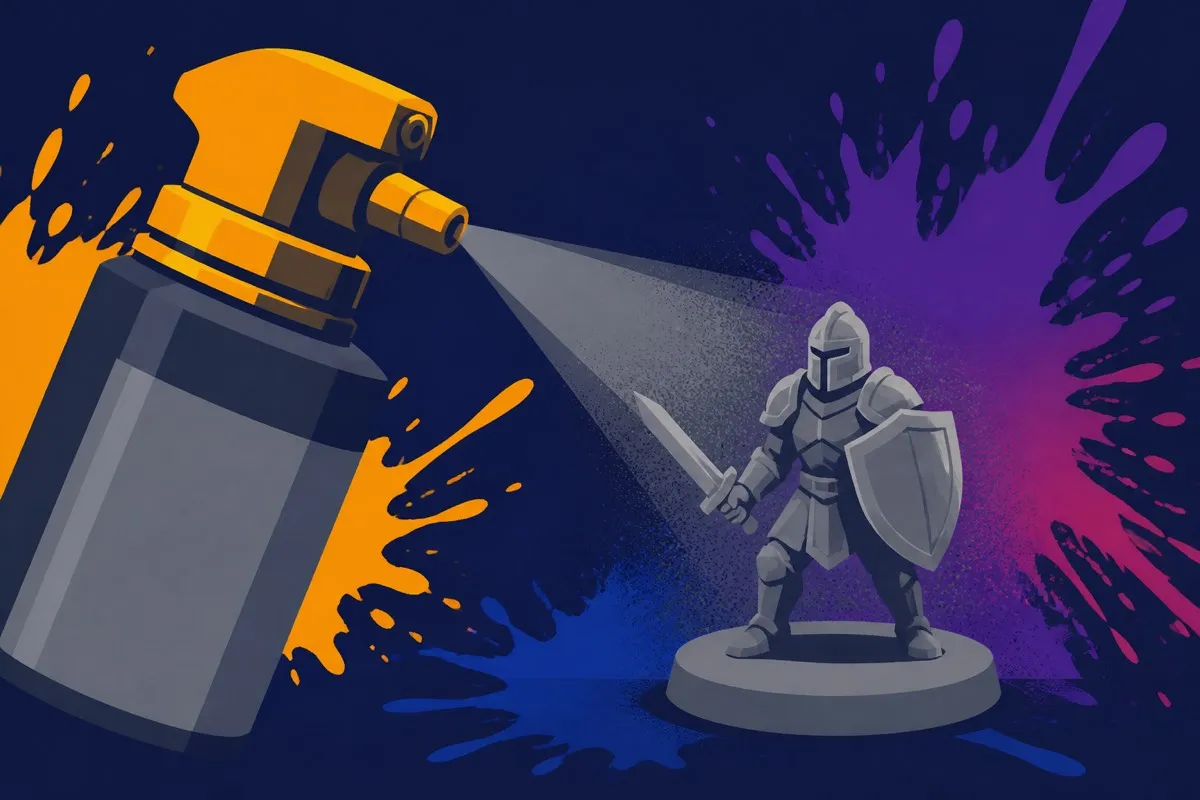
The best primer for miniature painting for most painters is a liquid acrylic primer applied by brush or airbrush, not an aerosol can. Liquid primers give you full control over coverage, dry to a finer texture that holds detail on smaller models, work indoors without ventilation concerns, and avoid the shipping restrictions that make aerosol cans a hassle to order and receive. Aerosol primer still has a place for painters priming large batches outdoors, but if you are buying your first primer or replacing a can that will not ship easily, a liquid primer is the more practical starting point.
Why liquid primer over aerosol
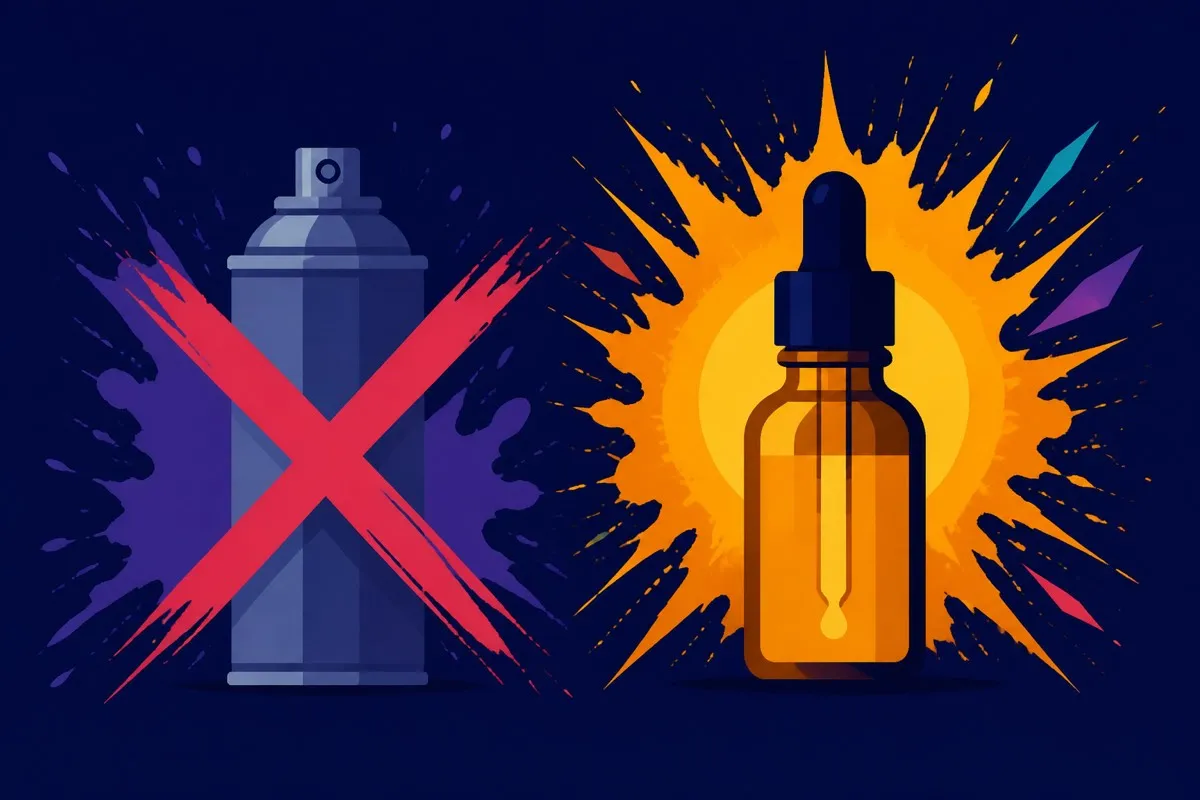
Aerosol primer sprays a heavier, coarser coat that can fill in fine details on smaller-scale miniatures and is nearly impossible to control indoors without a spray booth. Liquid primer thinned through an airbrush or applied straight from the bottle with a brush gives you a thinner, more even key coat, and you can spot-prime small conversions or repairs without recoating an entire model. It also sidesteps the delivery restrictions that come with shipping pressurized aerosol cans, which is the main reason most online hobby retailers list fewer aerosol options than liquid ones.
Brush-on versus airbrush liquid primer
Both formats key the same acrylic paint to the surface, so the choice comes down to your tools and how many models you are priming at once.
| Format | Best for | What to expect |
|---|---|---|
| Brush-on liquid primer | Single models, spot repairs, no airbrush | Thicker key coat, slower for large batches |
| Airbrush liquid primer | Whole armies, batch painting | Thin even coat, needs an airbrush and compressor |
Army Painter's Brush-On Primer is a straightforward option if you are priming a handful of models without an airbrush on hand, and it is also sold as a bottled liquid you can buy directly(affiliate link) for touch-ups between batches. For airbrush work, Vallejo Surface Primer(affiliate link) is one of the most widely used liquid primers in the hobby, thinning easily and curing to a tough matte surface that holds acrylic paint without chipping under normal handling.
Primer choices by material
Not every liquid primer grips every surface equally well, and this is where painters run into trouble most often.
- Plastic and resin: Most acrylic liquid primers work reliably here. Badger Stynylrez Primer(affiliate link) has a strong reputation specifically for gripping resin, which can resist paint more than injection plastic.
- Metal: Metal miniatures need a primer with real bite, since paint has nothing to key into on a bare metal surface the way it does on textured plastic. Stynylrez and Vallejo Surface Primer both hold up well here.
- 3D printed resin: Print layer lines can telegraph through a thin primer coat. AK Interactive Primer and Microfiller(affiliate link) is built to fill fine layer lines while it primes, which saves a separate filling step on prints.
- Flexible or heavily handled models: Vallejo also sells a Mecha Primer formulated specifically to resist chipping on models that get picked up and handled often, a common issue with gaming pieces rather than display models.
If you already paint with Pro Acryl, the range includes its own Matte Black, Matte White, and Matte Grey Primer formulated to match the rest of the line's pigment and drying behavior, which keeps everything on the desk from one supplier.
Black, white, or grey: does undercoat color matter?
Undercoat color shifts every color you paint over it more than most painters expect. A black undercoat darkens and mutes colors painted thinly over it, which suits dark or metallic schemes. A white undercoat keeps colors bright and saturated but requires more coats of anything dark to fully cover. Grey splits the difference and is a common default for painters who use a mix of light and dark colors on the same model. There is no universally correct choice, only the one that matches the palette you are about to paint.
Getting an even key coat
Whichever liquid primer you land on, thin control matters as much as the primer itself. Airbrush users should keep a dedicated acrylic thinner on hand rather than relying on water alone, since additive-free water can leave the primer coat uneven on tricky surfaces like resin. See the Vallejo range guide and Army Painter range guide for how each brand's primer line fits into their wider acrylic catalog.
FAQ
Is liquid primer better than spray primer for miniatures?
For most painters, yes. Liquid primer gives finer control, works indoors without a spray booth, and does not carry the shipping restrictions that come with aerosol cans.
What primer works best on resin miniatures?
Badger Stynylrez and Vallejo Surface Primer both have strong reputations for gripping resin surfaces, which can resist paint more than standard injection plastic.
Should I use black or white primer for miniatures?
Black undercoat darkens and mutes colors painted over it, suiting dark or metallic schemes. White keeps colors bright but needs more coats of dark paint to fully cover. Grey is a common middle ground.
Can you brush on primer meant for an airbrush?
Most liquid primers can be applied by brush, though they may go on thicker and less evenly than through an airbrush. Dedicated brush-on primers are formulated to flow better under a brush specifically.
Does 3D printed resin need a different primer?
Print layer lines can show through a thin primer coat, so a primer with a light filling property, like AK Interactive's Primer and Microfiller, helps smooth the surface while it primes.