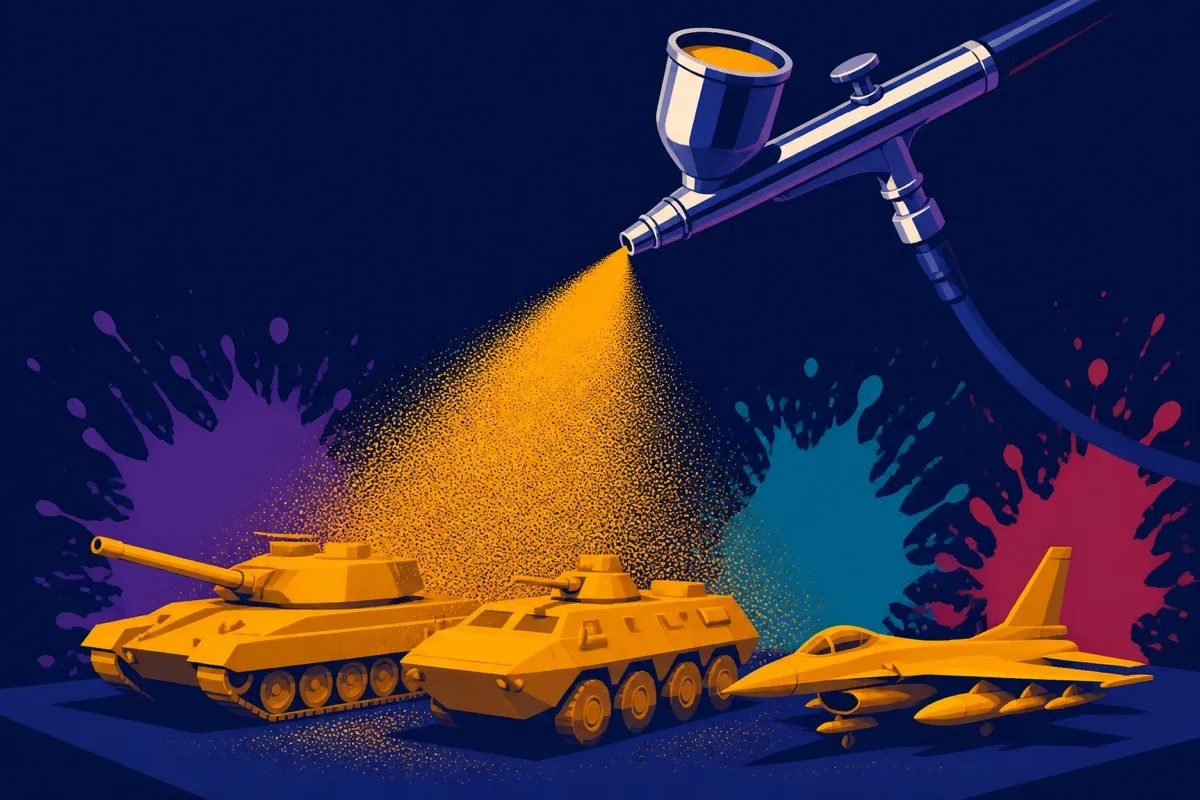
An airbrush kit for scale models needs three things working together: an airbrush with a small enough needle for fine work, a compressor with a regulator that holds steady pressure, and paint thinned correctly for the airbrush rather than for a brush. Buying any one of those pieces without thinking about the other two is the most common reason a first airbrush purchase disappoints.
The airbrush itself
A gravity-feed, dual-action airbrush with a 0.3 to 0.35mm needle is the standard recommendation for scale models and miniatures, since it handles both large basecoats and finer panel-line and shading work without swapping equipment. The Iwata Eclipse HP-CS(affiliate link) is a common reference point for reliability at this needle size, and the Harder and Steenbeck Ultra(affiliate link) is a frequently recommended step up in build quality for painters who plan to use it heavily. Both handle primer through fine highlight work. A Badger Patriot 105(affiliate link) is a solid value option if the price gap on the first two matters more than incremental build quality.
For a side-by-side breakdown of specific models, see Iwata Eclipse vs Neo and the broader beginner airbrush picks.
The compressor matters as much as the airbrush
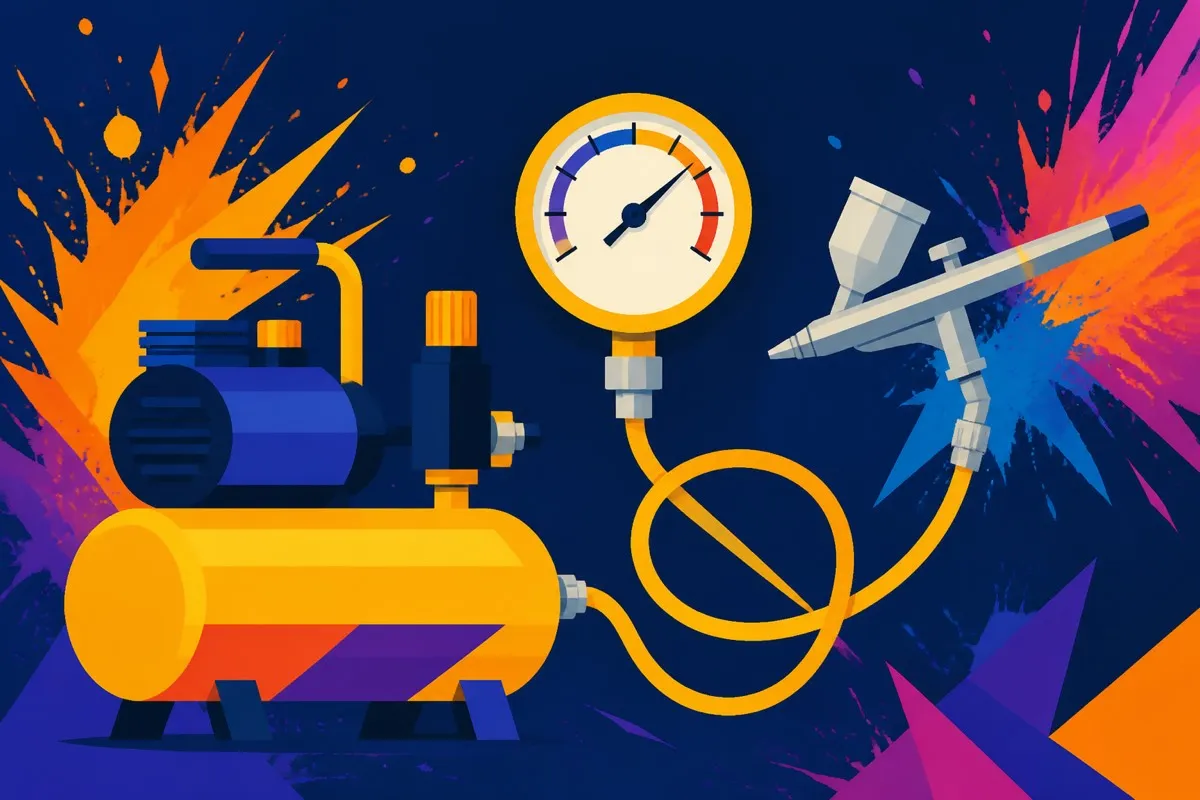
A cheap or undersized compressor is the most common reason an airbrush kit performs badly even when the airbrush itself is a good one. Look for a compressor with a built-in tank and a working pressure regulator, since a tank smooths out pulsing that shows up as uneven paint texture, and a regulator lets you drop pressure for fine work without changing your whole setup. An airbrush compressor with tank and regulator(affiliate link) covers both needs in one purchase. Bundled all-in-one kits, sold as an airbrush and compressor starter kit(affiliate link), are a reasonable way to get a matched airbrush and compressor together for a first purchase, though check that the included compressor has a tank before buying, since some bundles cut cost there first.
Paint and thinning for airbrush use
Not every miniature paint sprays cleanly straight from the bottle. Ranges built for airbrush use, like Vallejo Model Air or Vallejo Mecha Color, are pre-thinned close to airbrush consistency. General-purpose ranges like Citadel base colors or Vallejo Model Color need thinning, typically with dedicated airbrush thinner(affiliate link) rather than plain water, since a proper thinner keeps the paint's flow and drying properties intact instead of just diluting the pigment. Priming through an airbrush is one of the most common first uses, and Vallejo Surface Primer covers how that specific product handles through both brush and airbrush application.
Cleanup and maintenance
Airbrushes clog if they are not cleaned between colors and after every session, and cleaning is the part of airbrushing new owners underestimate most. An airbrush cleaning pot(affiliate link) with a brush built into the lid catches spray-through cleaning without soaking your desk, and a bottle of airbrush cleaner and flush solution(affiliate link) breaks down dried acrylic in the nozzle far faster than water alone. A small nozzle cleaning brush kit(affiliate link) handles the fine internal parts that clog first. Rinsing between colors and doing a full teardown clean at the end of a session is the difference between an airbrush that lasts years and one that clogs solid within a few months.
For a full ranked comparison across price points, see airbrush and compressor kits ranked.
FAQ
What needle size airbrush is best for miniatures?
A 0.3 to 0.35mm needle covers both basecoating and fine detail work for most miniature and scale model painters, without needing a second airbrush for finer jobs.
Do I need a separate compressor or can I use a can of compressed air?
Canned air works for very occasional use but runs out fast and cannot hold steady pressure. A proper compressor with a tank and regulator is worth the cost for anyone airbrushing regularly.
Can I use regular miniature paint in an airbrush?
Yes, but most general-purpose ranges need thinning first. Paint ranges specifically labeled for airbrush use are pre-thinned and need little or no adjustment.
How often should I clean my airbrush?
Rinse between every color change during a session, and do a full cleaning and teardown at the end of each session. Skipping this is the leading cause of clogged nozzles.
Is a cheap airbrush kit worth buying for a first try?
A budget kit can be a reasonable way to learn the basics, but check that the compressor includes a tank and regulator, since that piece affects results more than airbrush price alone.